Day 21 Autism Awareness Month. U is for Ubiquinol

Day 21

U is for Ubiquinol

(originally posted 4/2015)

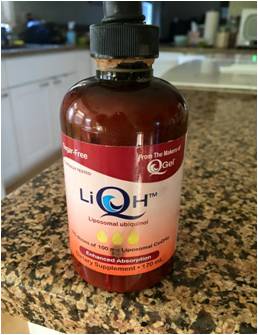
If you have heard this word before it is likely that you are either are a biologist or have a child with a mitochondrial disorder. In our case, to be sure….I am not a biologist. There is mounting evidence that autism and mitochondrial disorders at least co-exist in many cases. Mitochondria are organelles in almost every cell in the body and are considered the powerhouse of the cell. The mitochondria break down chemical compounds into energy and put it back into the cell for use. When there is a breakdown in the mitochondria factory, it cannot produce enough energy for the cell which can result in cell damage or death. This damage tends to affect larger organ systems such as the brain, heart, endocrine system, gastrointestinal system, kidneys and respiratory system. (As I mentioned….I am not a biologist..that’s about the best I can explain). The first time after 9th grade biology I heard about ATP or mitochondria was sitting in a neurologists office with A2 when she cocked her head and said “I need to send him to the Cleveland Clinic….I think he has mitochondrial disease…I am so sorry….”. I was confused–“Ok”, I said and left the office feeling optimistic that maybe we figured out why my baby completely stopped physically growing or gaining weight and developing. If we know what it is….we can treat it, why was she apologizing? But as it turns out, there is no cure and no real treatment for mitochondrial disorders. These disorders also tend to be progressive in nature so we must try to protect the mitochondria to the best of our ability using supplementation (thus the Ubiquinol CoQ-10) and body system balance. Under a microscope, A2’s mitochondria are oddly shaped..and there are a whole lot of them…and this hastened the question did some disease process or environmental assault cause this problem….or did he inherit it from me (mito are maternally inherited)? If something happened, what was it? Did I eat too many pesticides on my produce while nursing? Was his immune system down when he got a vaccination? Was the rated “F” water in Las Vegas where he was born full of toxins that damaged my baby? I am rational enough to know that there was nothing I could have done about my own mitochondria nor could I guess exactly what environmental assault would have caused such a huge problem…but it is here. And I now know why the neurologist apologized to me on that warm, blue skied summer day back in 2006…..

Autism Awareness Month. S is for Skeletons

Day 19

S is for Skeletons

(edited and reposted from 4/2015)

In a way we are luckier than many in that when you meet A2, it is clear he is generally sweet and happy. It is also clear that he is a 10 year old with limited language and an intense fascination with things like dangling light bulbs and garage doors. This combination is like a free pass since it would be weirder to not acknowledge it, I get to talk about it.

But just a little bit.

It’s not exactly like airing dirty laundry. It’s more like airing dry cleaning–the-sort-of-dirty-nicest-silk-dress-in-my-closet kind of laundry. Let’s face it, there are socks and skivvies in all of our hampers we wouldn’t dare let hang out on the line in the backyard. For us, in the best of our worst case scenario of autism, A2 can make autism seem almost ethereal. And he IS inspirational. Despite his challenges he plows through life with a joy and wonder as if even the slightest thing is something he has seen for the first time. When we hire aides to work in our home, I warn them in advance that their work space is located in the darker cubicle of my life. While it can be a place full of love and ideas and fun, it is also the space where anxiety, anger and compulsiveness roll up like dust bunnies in the corner. They are invited into that laundry room to watch me fold those things we can’t hang outside to dry. They get to see the worst of the best case scenario and of course are free to form opinions or quietly judge. These young women know more than my “inner circle” of friends and it is not a comfortable place to be, but I let it happen for the benefit of my child for whom alone I could not be successful.

Why would I focus on this today when I have shared more about what it’s like on social media than I ever intended? Because we are “out” and wholly connected with the special needs community. There are revolutionaries who have adult children and walked with a yoke of all the things autism brings around their shoulders before anyone knew what autism was and never got the help they needed, so they created it for us. There are families you may know who can’t take their children in public for fear they won’t be safe to themselves or others. There are those who walk among us invisible–who closely protect their tangled criss-cross of laundry lines for fear of being judged, or worse yet, for their child being judged over something beyond their control. These are the people who might need to be seen and understood the most because they are not likely connected to a community who will understand. This is also autism.

Awareness is not just about what we do see, it’s also about what we don’t. If you are a revolutionary or an invisible family, reach out to me…tell me you are here….and if you are feeling brave, let me tag you on this post.

Autism Awareness Month. R is for Relationships

Day 18

“Are you sure he has Autism? He’s so friendly…”

While there are more nuanced aspects now to the criteria, failure to develop peer relationships appropriate to developmental level is one of the defining and most obvious diagnostic identification for children with autism.

Interest in people in general, desire for friendships and loving behavior can muddy the diagnostic waters and confuse people about what autism is and what autism isn’t.

Disconnectedness, aloofness and lack of desire to be touched does not always translate as a lack of desire for relationships. The desire is there, the understanding for how that happens is not. It can just be easier to be by yourself. A1 can tell you that.

Indiscriminate friendliness, hugs and kisses to those he loves and the compulsive desire to be around a lot of people doesn’t always coexist with developmentally appropriate social skills. A2 probably would tell you that part…if he could. He is just as likely to enthusiastically greet a stranger in a public bathroom as he would a child at school he knows well.

A2’s splintered play skills had to be taught like you would teach a typically developing child how to read. And he has missed many steps in this such as building with blocks and representational play. This spectrum of deficit in social interactions makes it much like I am raising 2 only children.

A2 wants nothing more than to play with A1, but has no idea how to engage in some of the more rigid independent activities he is playing.

A1 wants nothing more than to play by himself because he has no idea how to model the back and forth necessary for that interaction to work if it is not an activity of high interest.

I believe they love each other…but much of the time it is like they are drifting in separate rafts in a tumultuous sea of desire for one another’s companionship without oars the to paddle over to each other. Sometimes their boats coincidentally bump. It is those moments as a mom I see a glimmer of typical sibling antagonism, tattling and sometimes even a game of Connect 4 and hope that they both hold on to each other’s rafts and paddle to shore together one day.

Autism Awareness Month. Q is for Quirky

Day 17

“Why does he do that?” A common question for parents of children with autism. There is no easy answer for that in a global sense given each child with autism is as unique as any child without autism. Many times it’s because the wires are crossed neurologically causing some kids like A2 to perceive things in the world differently. Licking a basketball before he shoots it, flapping his arms whenever he is excited or anxious or hooting loudly when he sees something interesting….try thinking instead taste sometimes is like balance, repetitive movements are calming to the body and noise is quicker that coming up with words. Sometimes the quirk comes because the part of the brain responsible for things like memory, the time it takes to process information and the ability to take another persons’ perspective has a blip and experiences the world in the same way much like A1. Someone just said to me “I always thought he just marches to the beat of his own drummer”. And he does. They both do. My kids are as they are and as they should be but at the same time they do need to be functioning and hopefully contributing members of society. Sometimes though, to watch the struggle of loneliness because others don’t understand is painful and hope that I am projecting my own anxiety and that they are more resilient than I give credit for. This unique and quirky nature of autism makes my guys who they are…..and they are perfect to me. Perfect…and different, not less….

Autism Awareness Month. P is for Pediatrician

Day 16

P was hard because there are so many things P can be for us. Passion, Pediasure, potty training, poop, persistence (in a good way). But if this is about awareness, this is critical.

Early conversations over time had with doctors about both A1 and A2: Me: “He’s sitting up already but his hands are still in fists and he can’t grab anything-something doesn’t feel right. ”

Doc: “Wow. He’s just really uncoordinated.”

Me: “He can say way more than I think he understands-so I had a speech therapist look at him and she validated that, what is that?”

Doc: “That’s impossible. That therapist doesn’t know what she’s talking about.”

Me: “Since our move I’ve noticed he doesn’t babble in his crib any more and he only smiles at the microwave and the lamp, but not me.”

Doc: “You just moved…he’s getting used to his environment don’t worry about it (at 8 mos. old).”

I wish I could say that we just had a doctor who was incompetent  (and no, the picture is not of the ACTUAL doctor which would potentially explain how things would be missed), but I hear things just like this in my private practice all the time.

All. The Time.

If your gut feels off about something and you are dismissed by your pediatrician, get a second opinion. Seek out information online about early symptoms of autism. All the research points to early intervention as the key component to long term success with the symptoms of autism. There are programs that are now identifying autism in infants. Lack of eye contact, failure to meet developmental milestones (especially language), lack of responsiveness to their name, repetitive motions such as flicking hands in front of their face are just a few. Even outside of classic symptoms, there are some not so classic ones.

Both as a social worker, but also a mom, if you have a nagging gut feeling….”let’s wait and see if he grows out of it” may waste precious time.

Autism Awareness Month. O is for Obstinate.

Day 15

O is for Obstinate

All kids can be defiant. All kids can be persistent. Most can be both at one time or another…..however the persistence of a person with Autism can sometimes be far outside typical willfulness of even the most obstinate of kiddos. Most of this stems from intense need for familiarity, order and sameness of routine. This rigidity is part of the diagnostic criteria of Autism Spectrum Disorders. Sometimes I have no idea what will trigger A2 into a 3 hour long battle of wills. What can be a 5 minute routine one day can take 2 hours the next even when he knows that routine ends in something he enjoys. A1…no matter how much punishment, berating or time outs he got, he would get right back up and do the same thing over again. One summer I decided to ‘put my foot down’ and send him to the time out step after every single infraction.  No warnings.  That should teach him!  After about a week of this, there was a day that I had sent him 17 times all before my husband got home from work. And he went willingly. Every. Single. Time. Something was very wrong and thankfully I had a moment of clarity.  I got a clear cup, drew some lines across it and found a bag of marbles.  Every time I caught him doing the right thing, I would throw a marble in the cup with the caveat that he couldn’t point out to me how good he was being. Unless he hurt someone (which he never did), there was no more time out step. Every time we filled the cup to a line, he got to pick what we did next in our day.  If we got to the top (by the end of the day), he could get a dessert after dinner.

Just. Like. That. Everything was different. He would listen the first time and look out of the corner of his eye to see if I was digging for a marble. He got double marbles if he initiated social interactions. Before long, we were engaged in pretend play in the basement.

I had someone close ask “Don’t you think it might not be autism?  Don’t you think it is could be his personality?”.

“Well, ” I indulged “if everything we do serves a function, what function do you think his behavior served that week?”  Without much hesitation, she drew her hand up as if she was grabbing something and said “To have a ‘gotcha’ moment!” I thought for a moment.  “What 4 year-old would rather sit on a step over and over, day after day instead of playing just to get under his mother’s skin? Isn’t a week long enough to learn that without the behavior increasing?”  A four-year-old.  Clinically, that would be a much, much bigger issue than autism.

Before that, I used to joke about how even a dog can learn to salivate to the sound of a bell when paired with food over time, yet I could not get my child to understand how his behavior had anything to do with the consequence he would receive. It’s one of the most bewildering and frustrating parts of parenting because regular consequences do not work. Though A2 may connect consequence to behavior in the moment, the pathology outweighs all and it is likely that he may not learn from his behavior for the next time.  A2’s Childhood Apraxia of Speech required us to do drill work with cards for sounds and words over and over.  Did we create some of this rigidity with him because of this?  Probably.  Did I have any idea that would be possible then?  No. But the trade off was that he learned to try to speak and can make some needs known so that people other than me and my husband understand.  Was it worth it?  As a parent with limited understanding and resources  I would have to say “yes”, because he displayed rigidity before that.  Even as I add to this blog post from the original version written two years ago, I realize how much I have learned to even question if this was possible.  We have lots to continue to learn.

Autism Awareness Month. N is for Night

Day 14

This photo was taken over the Scioto River in broad daylight, but thanks to filters it looks like a cross section between day and night. When sleep is elusive for our children with autism and days roll into nights roll that into days… that sultry blanket doesn’t seem quite as enchanted and that line between light and dark not nearly as defined. I’m not certain that A2 has ever slept through the night in his life. For the first several years of his life he was up every 90 minutes or so. I was told to let him cry it out. So I did. And then abandoned the wholehearted attempts after 11 weeks. We have it easier than many. A2’s nighttime visits do not include damaging the house, self harm or escaping, but is instead marked with fitful wandering, bed hopping, laundry for diaper leaks and sometimes a sneaky visit with The Wiggles on the DVR. We wonder if his slow cognitive development and behavioral issues are exacerbated by exhaustion and we try to have patience in our own exhaustion recognizing that if he could sleep, he would. There is no simple answer for the underlying etiology of lack of sleep for kids with autism and hope that my guy doesn’t feel tortured by sleep being just a visitor passing through. In the still of darkness I wonder if I am the only one awake in the world. Shadows turn into demons of an uncertain future and the quiet becomes a deafening blare of anxiety that the hustle and pace of the day drowns out. Perhaps even if A2 could have restful sleep, I am fairly certain that I still would not.

Autism Awareness Month. Day 12. L is for Love

Day 12

L is for Love

Because L is ALWAYS for love when it’s about your child.

As a parent, as do many special needs parents, I find it confusing and sometimes a little unsettling when people say to me “I don’t know how you do it” or “I don’t think I could do what you do” or elevate my parent-ness to the likes of a saint. People are well meaning-I know the awkward sentiment is often a compliment of sorts, but it’s hard to respond. What is the most difficult thing you would do for your own child? Push him out of the way of a bullet and take it yourself? That would be mine, because caring for my child and meeting his needs is not even a close comparison to taking a bullet. We love our children with parts of our souls that we did not know existed before they were here. And I promise, guarantee, pinky swear you absolutely 100% WOULD know how we do what we do and you would do it too because there is no other option in the surrendered obligation of the deep love for your own child. So…if you have said this before to an autism parent, do not fret I don’t speak for everyone–we get what you mean. Moving forward consider this sentiment and instead try, “what is it like to be ______’s dad?” Or “how is physical therapy going?” Or “what is the most useful thing I can do to help?”.

Autism Awareness Month 2015. K is for Kismet.

Day 11

In the month of our 15 year anniversary, I can confidently say we have embarked on a journey neither of us could have expected.

In some ways I wonder if our trek is easier than others since we never had musings of what our unborn children would be like or what kind of parents we would be.

…or if we would be parents at all….

I believe in a judicious balance between predestination and free will. Sort of like walking into a movie complex. You can pick the movie you will see, but once you choose it, the plot and ending remain the same. It is up to you if you decide to leave the theater to get popcorn or simply decide that movie is not for you and you should have never listened to Siskel and Ebert’s reviews to begin with.

All marriages require a gentle balance between cohesiveness and independence….and especially with families like ours. Stress is a constant, sleep deprivation a given, and child rearing? Well, throw out everything you ever thought you knew about that. Not everyone can do that.  Usually, the stronger is left holding the bag on their own.  I know too many families like that and watch in awe as the parent left behind carries the weight of her world.

Through thick and thin we give each other the space we need, recognizing we are in for the long haul.  Our children are who they are supposed to be.  We make the same mistakes as every other parent in every other union, but with the knowledge we must be united as forever parents, even long after we are gone.  And for that, perhaps we are luckier than most.

Autism Awareness Month. Day 8. H is for Haircuts.

Day 8

H is for Haircuts

Lots of autism moms become expert level beauticians early on. I can scissor cut the hair of a moving target in 10 minutes or less without making my subject look like Moe from the 3 Stooges. But it’s been a long time coming…A2’s flip switched at about 24 months and haircuts became Wrestlemania meets the Exorcist with half-nelsons, projectile vomiting, sweating, injuries and lots of public interest. Many children with Autism fear hair cutting time as it becomes sensory overload for them. In addition to having to sit still for extended periods of time, the smells of unfamiliar products, the feel of a wet head the sounds of clippers buzzing becomes a sensory nightmare. Haircuts are pleasant experiences now in the comfort of our own bathroom and paired with Monsters Inc on the iPad and the promise of getting to use the vacuum for clean up.