P was hard because there are so many things P can be for us. Passion, Pediasure, potty training, poop, persistence (in a good way). But if this is about awareness, this is critical.
Early conversations over time had with doctors about both A1 and A2:Me: “He’s sitting up already but his hands are still in fists and he can’t grab anything-something doesn’t feel right. ”
Doc: “Wow. He’s just really uncoordinated.”
Me: “He can say way more than I think he understands-so I had a speech therapist look at him and she validated that, what is that?”
Doc: “That’s impossible. That therapist doesn’t know what she’s talking about.”
Me: “Since our move I’ve noticed he doesn’t babble in his crib any more and he only smiles at the microwave and the lamp, but not me.”
Doc: “You just moved…he’s getting used to his environment don’t worry about it (at 8 mos. old).”
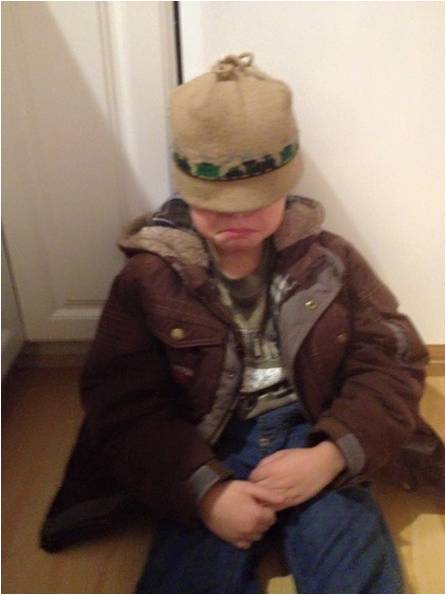
I wish I could say that we just had a doctor who was incompetent (and no, the picture is not of the ACTUAL doctor which would potentially explain how things would be missed), but I hear things just like this in my private practice all the time.
All. The Time.
If your gut feels off about something and you are dismissed by your pediatrician, get a second opinion. Seek out information online about early symptoms of autism. All the research points to early intervention as the key component to long term success with the symptoms of autism. There are programs that are now identifying autism in infants. Lack of eye contact, failure to meet developmental milestones (especially language), lack of responsiveness to their name, repetitive motions such as flicking hands in front of their face are just a few. Even outside of classic symptoms, there are some not so classic ones.
Both as a social worker, but also a mom, if you have a nagging gut feeling….”let’s wait and see if he grows out of it” may waste precious time.
All kids can be defiant. All kids can be persistent. Most can be both at one time or another…..however the persistence of a person with Autism can sometimes be far outside typical willfulness of even the most obstinate of kiddos. Most of this stems from intense need for familiarity, order and sameness of routine. This rigidity is part of the diagnostic criteria of Autism Spectrum Disorders. Sometimes I have no idea what will trigger A2 into a 3 hour long battle of wills. What can be a 5 minute routine one day can take 2 hours the next even when he knows that routine ends in something he enjoys. A1…no matter how much punishment, berating or time outs he got, he would get right back up and do the same thing over again. One summer I decided to ‘put my foot down’ and send him to the time out step after every single infraction. No warnings. That should teach him! After about a week of this, there was a day that I had sent him 17 times all before my husband got home from work. And he went willingly. Every. Single. Time. Something was very wrong and thankfully I had a moment of clarity. I got a clear cup, drew some lines across it and found a bag of marbles. Every time I caught him doing the right thing, I would throw a marble in the cup with the caveat that he couldn’t point out to me how good he was being. Unless he hurt someone (which he never did), there was no more time out step. Every time we filled the cup to a line, he got to pick what we did next in our day. If we got to the top (by the end of the day), he could get a dessert after dinner.
Just. Like. That. Everything was different. He would listen the first time and look out of the corner of his eye to see if I was digging for a marble. He got double marbles if he initiated social interactions. Before long, we were engaged in pretend play in the basement.
I had someone close ask “Don’t you think it might not be autism? Don’t you think it is could be his personality?”.
“Well, ” I indulged “if everything we do serves a function, what function do you think his behavior served that week?” Without much hesitation, she drew her hand up as if she was grabbing something and said “To have a ‘gotcha’ moment!” I thought for a moment. “What 4 year-old would rather sit on a step over and over, day after day instead of playing just to get under his mother’s skin? Isn’t a week long enough to learn that without the behavior increasing?” A four-year-old. Clinically, that would be a much, much bigger issue than autism.
Before that, I used to joke about how even a dog can learn to salivate to the sound of a bell when paired with food over time, yet I could not get my child to understand how his behavior had anything to do with the consequence he would receive. It’s one of the most bewildering and frustrating parts of parenting because regular consequences do not work. Though A2 may connect consequence to behavior in the moment, the pathology outweighs all and it is likely that he may not learn from his behavior for the next time. A2’s Childhood Apraxia of Speech required us to do drill work with cards for sounds and words over and over. Did we create some of this rigidity with him because of this? Probably. Did I have any idea that would be possible then? No. But the trade off was that he learned to try to speak and can make some needs known so that people other than me and my husband understand. Was it worth it? As a parent with limited understanding and resources I would have to say “yes”, because he displayed rigidity before that. Even as I add to this blog post from the original version written two years ago, I realize how much I have learned to even question if this was possible. We have lots to continue to learn.
This photo was taken over the Scioto River in broad daylight, but thanks to filters it looks like a cross section between day and night. When sleep is elusive for our children with autism and days roll into nights roll that into days… that sultry blanket doesn’t seem quite as enchanted and that line between light and dark not nearly as defined. I’m not certain that A2 has ever slept through the night in his life. For the first several years of his life he was up every 90 minutes or so. I was told to let him cry it out. So I did. And then abandoned the wholehearted attempts after 11 weeks. We have it easier than many. A2’s nighttime visits do not include damaging the house, self harm or escaping, but is instead marked with fitful wandering, bed hopping, laundry for diaper leaks and sometimes a sneaky visit with The Wiggles on the DVR. We wonder if his slow cognitive development and behavioral issues are exacerbated by exhaustion and we try to have patience in our own exhaustion recognizing that if he could sleep, he would. There is no simple answer for the underlying etiology of lack of sleep for kids with autism and hope that my guy doesn’t feel tortured by sleep being just a visitor passing through. In the still of darkness I wonder if I am the only one awake in the world. Shadows turn into demons of an uncertain future and the quiet becomes a deafening blare of anxiety that the hustle and pace of the day drowns out. Perhaps even if A2 could have restful sleep, I am fairly certain that I still would not.
In the presence of music, A2 is the conduit that paints the musical mural that you cannot see just by listening. It is a source of joy, excitement, passion and communication for him. Though A2 has a high desire to communicate his speech/language disorder makes it very difficult if not impossible sometimes to do so. A symptom of his Autism is Childhood Apraxia of Speech. Communication disorders that involve speech directly are a common issue for many children on the spectrum. A2 often knows what he wants to say, but cannot make his mouth follow the step by step instructions his brain wants him to in order to form sounds, sentences or ideas. This is a motor planning difficulty. There are phonological errors, jargoning and word finding problems and oral-motor weakness in addition that prohibit him from effectively communicating verbally. In addition to the 6 hours a week he receives of Speech therapy, Occupational therapy, Physical therapy and social skills training, A2 also receives Music therapy. Through music, he is learning how to say our names, his address and phone number. Music is his best friend, his motivator and his unique yet universal connection to everyone around him.
Because L is ALWAYS for love when it’s about your child.
As a parent, as do many special needs parents, I find it confusing and sometimes a little unsettling when people say to me “I don’t know how you do it” or “I don’t think I could do what you do” or elevate my parent-ness to the likes of a saint. People are well meaning-I know the awkward sentiment is often a compliment of sorts, but it’s hard to respond. What is the most difficult thing you would do for your own child? Push him out of the way of a bullet and take it yourself? That would be mine, because caring for my child and meeting his needs is not even a close comparison to taking a bullet. We love our children with parts of our souls that we did not know existed before they were here. And I promise, guarantee, pinky swear you absolutely 100% WOULD know how we do what we do and you would do it too because there is no other option in the surrendered obligation of the deep love for your own child. So…if you have said this before to an autism parent, do not fret I don’t speak for everyone–we get what you mean. Moving forward consider this sentiment and instead try, “what is it like to be ______’s dad?” Or “how is physical therapy going?” Or “what is the most useful thing I can do to help?”.
In the month of our 15 year anniversary, I can confidently say we have embarked on a journey neither of us could have expected.
In some ways I wonder if our trek is easier than others since we never had musings of what our unborn children would be like or what kind of parents we would be.
…or if we would be parents at all….
I believe in a judicious balance between predestination and free will. Sort of like walking into a movie complex. You can pick the movie you will see, but once you choose it, the plot and ending remain the same. It is up to you if you decide to leave the theater to get popcorn or simply decide that movie is not for you and you should have never listened to Siskel and Ebert’s reviews to begin with.
All marriages require a gentle balance between cohesiveness and independence….and especially with families like ours. Stress is a constant, sleep deprivation a given, and child rearing? Well, throw out everything you ever thought you knew about that. Not everyone can do that. Usually, the stronger is left holding the bag on their own. I know too many families like that and watch in awe as the parent left behind carries the weight of her world.
Through thick and thin we give each other the space we need, recognizing we are in for the long haul. Our children are who they are supposed to be. We make the same mistakes as every other parent in every other union, but with the knowledge we must be united as forever parents, even long after we are gone. And for that, perhaps we are luckier than most.
An Occupational Therapist once corrected me in a meeting when I mentioned that A2 ‘s progress is like being in a race. She said “no, it’s like being in a marathon, you have to pace yourself”….but not having a child with a disability herself what she didn’t understand is that he needs to be front runner in that marathon if he has any hope of functional independence as an adult. As any kid ages, it gets harder to learn new things easily–neural pathways are set, myelination slows down…so early on every moment needs to become practice or a learning opportunity. We celebrate small steps toward independence with hope. After 2 years of task analysis, A2 can almost navigate a bathroom (with the exception of going) with minimal assistance. Yesterday, he independently ordered fries. But he cannot be alone or play outside without supervision, he cannot make his needs known clearly, he doesn’t know what to do in emergencies. A2 is not likely to ever live independently and as older parents without a caretaker for him this is terrifying. So we move forward and relish and celebrate every step forward with hope…and so does A2. Each step represents countless hours of work, practice and sometimes frustration. Everything he does takes 50x longer 100% more effort to learn than a child sitting next to him. His independence is truly the embodiment of a strong spirit and determination.
This breakfast is 8 years in the making. A2 eats a total of 9 different foods..all presented in a certain way.–all brand specific. Starting from 0. He has worked so hard to get to this point and I feel a weird balance of pride, frustration and futility when I see this plate. Feeding issues in autism are common and are outside of “oh, all kids can be picky eaters” or “just tell him if he doesn’t eat dinner, he won’t get anything later–it’s not like he’ll let himself starve”. Because actually….he will. Many children with autism have serious food aversions and feeding issues. The reasons are varied but tend to be due to sensory, texture, medical or obsessive-compulsive issues. Behavioral issues become deeply ingrained in these kiddos when eating is paired with physical pain due to gut issues so common in kids with autistic disorders and can last a lifetime. So-the next time you are out to dinner and see a mom letting her kid eat Poptarts or a huge mound of fries for dinner–she may not be spoiling her kiddo….that dinner may also be 8 years in the making.
F is for Food…Part 2….Behind the kitchen door
There was this moment when my then preschool aged child and infant and I were sitting at the dinner table. I had my plate of one protein, one complex carb and leafy greens, napkin unfurled neatly in my lap, fork down after every bite. My prescribed Xanax appetizer was working as I sat there all June Cleaver-like smiling, asking about finger-paint and sandbox filled days, modeling healthy eating, modeling appropriate mealtime behavior…like I tried to every single day with little to no success. Dinner was cuisine and varied every night but there were 3 different dinner plates on the table. A1 wasn’t growing well and complained every mealtime that his stomach hurt. It would take him about 1/2 hour to eat even 50% of his meal but a big part of this was because he could not stay seated , would play with his shoes or get up to get a toy.
“Where are you going?”
“Did you have fun with your friends at school?”
“4 more bites.”
” You love buttery noodles, remember?”
“Don’t lick your shoes.”
“The timer hasn’t gone off yet.”
“I love this picture you made, tell me more about it.”
While this was going on, A2 sat strapped in to his high chair at the table with mounds of “power packed” foods. Macaroni and Cheese made with extra cheese, heavy cream and special calorie powder stirred in, crackers, whole milk with carnation instant breakfast. I was taking him to the doctor every several days for weigh ins because he was not growing or gaining weight with any normalcy. His Help Me Grow case worker taught me how to increase his calories…something that his dietician did not show me…or even suggest. He was eating about 1000 calories a day which was about the same amount I was eating to maintain pudgy and yet he still he would only gain ounces over the course of a few weeks. It made no sense. Most evenings he would sit in front of his food and not initiate eating so between my own bites I would a cajole him into letting me stick a Mickey Mouse spoon between his lips. He chewed funny. It did not look like he enjoyed eating, but generally he never fought it. But not this night. He turned his head from me and giggled at A1 who was now slowly sliding out of his chair, disappearing under the table. A2’s last weigh in he had dropped 4 ounces but we had no idea why. (Maybe I needed to put more of that Nestle Additions stuff in his milk? Should I switch to Boost? I think that has more calories. I wish he liked doughnuts!). In that moment, I experienced PXF (Parental Xanax Failure) and June Cleaver went bye bye. The underlying and increasing anxiety I was having at mealtime that caused me to medicate so I remained calm and cheery sprang to the surface and yelled “Ta da!!! Here I am everyone!!” I snapped at A1 to sit in his chair immediately and accused him of distracting his brother to the point of not eating….and his stomach is fine….so finish that spaghetti and garlic bread! I got out an assortment of spoons hoping A2 would pick one he liked better. He did not. As he sat thrashing his head from side to side and mooshing his lips together to avoid any possibility of the airplane making an emergency landing in his mouth I began bawling and begging him to eat like some bad drama actress from the 1940s. Meanwhile, A1 got up from the table to poop. What the hell was I doing wrong? Kids just eat, right?
About a year later, I dusted off that MOTHER OF THE YEAR trophy I earned that day and dropped it in the trash. A1 started losing weight and his pediatrician started taking his constant loose stools seriously. He had an elevated EMA (antibody test that is specific to gluten…as in that stuff found in spaghetti and garlic bread). After a week of no gluten he had his first normal looking poop of his life and soon after no more complaints at mealtime. A2 phased out all solid food before he turned 2 but was increasing the amount of Pediasure he drank. Within the month of being on a self-induced liquid only diet, he started sleeping much, much longer stretches, started walking and got consonant sounds. Sure, he projectile vomited 3 times a day but he seemed much happier. His head never spun around even once so we were fairly sure we were not going to have to call for an exorcism. To save money we switched to the a big box, El-Cheapo version of Pediasure. What we saved in monthly bills, we spent in clean up costs and therapy bills for A1 because the vomiting seemed to increase–as did his target range. And like fine wine connoisseurs, my husband and I decided the bouquet of El-Cheapo vomit was not as pleasant as Pediasure vomit. A1 and his hypersensitive sensory system were traumatized. (see exhibit A)
EXHIBIT A: Things he likes to smell: Perfume. Things he doesn’t like to smell: Vomit
Through deductive reasoning, I concluded that El-Cheapo brand was making it worse, we switched back and he improved. A few years later he improved even more when an integrative medicine doctor suggested he couldn’t digest dairy and thought he should be on a “pre-digested” prescription version of the same thing. “Oh…no. We had him tested, he’s not allergic to dairy…and our GI said its probably just a mito thing”. But sure enough within a few weeks of switching again, A2 stopped vomiting. Completely. And he was willing to play with and then even taste a few foods.
There is nothing more instinctual to a mother than nourishing her child. Our species would not survive if this were not the case. When your child has feeding issues it is normal to doubt your instincts, to question what you are doing wrong, how you are messing this up. Have I had to drop a few $20s into the therapy jar for later due to my own reactions? Sure. I am human and I find there has been almost nothing more unnerving than my child not eating or feeling sick when they eat but no one can tell me why. And when someone finally figures something out and they get better to start questioning EVERYTHING. Make sure you are being honest with yourself. Are you trying the best you can? Are you revisiting eating with your child? Are you trying to create a more relaxed environment at mealtimes? Can you, especially as a woman in this society put your own food issues aside? Pat yourself on the back if you can answer “yes” to those questions because your child will continue to thrive because of you. Breathe….and most importantly, enjoy your meal.
“Check water first”. The most terrifying emergency directive a parent can hear….and this is the protocol for children with Autism who go missing. Elopement, wandering, bolting, fleeing. 48% of children with autism elope. Drowning is the leading cause of death in kids under 14 with Autism. We are lucky-A2 only gets distracted and wanders to find things that are interesting without regard to safety or whether a familiar adult is nearby–but he does not run from us–which prevents so many families from being able to go in public safely with their child. One of the things that makes A2’s non-elopement complicated as that he is not a risk…. until he is. He can go a full year with staying in eye shot and then one day out of no where he will simply leave the house. With no warning. He also cannot tell anyone his first and last name with consistency or clarity. He does not know his address or phone number despite years of practice. He knows my full name, but unless you are a trained listener. you will not understand him. We all know to approach a young child who appears to be lost, but most would not think to approach an older child or young adult. Be aware–this is one way we can all be a village to our families!
Unfortunately, there are limited ways to actually prevent elopement behaviors. When we assume the function of behavior is escape we may be missing out on other factors. Does he bolt and laugh while doing it as he watches you chase him (attention)? Is he fascinated with streetlamps or water or heavy equipment and feels intense compulsion to go check it out (access or internal attenuation)? Does he seem to leave only in specific situations or with specific people? If you have a child that is a runner, consider tracking the behavior for antecedents and response or consequence (even when unintended), track the time of day and what was happening around him at the time. Track WHAT the elopement looks like…does he run or is it more like walking away? Does it change what it looks like based on the situation? Besides lockdown and direct supervision, understanding your child’s behavior through data collection is your best preventative defense.
As far as what else you can do if your child is an elopement risk…again, limited but both high and low technology options can be lifesavers. If your county or police department have a special needs registry, register your child. There is a national initiative and grant called Project Lifesaver that your police department can utilize and get wristbands with gps or radio signal your child can wear. Keep an up to date photo of him on you at all times. Create a card he can carry with him with his information and use discrete trial training to teach him to hand it to someone if he cannot find you. Consider a cell phone and GPS tracking or the Find My iPhone App. There are tracking devices like http://www.angelsense.com available for a monthly fee. These attach to the inside of clothing. Go online and search for other high and low tech options they are out there.
List of tracking, ID and safety products (not an exhaustive or all inclusive list): https://www.autismspeaks.org/family-services/resource-library/safety-products
It is easy not to move forward because we do not want to assume the worst…..but like for so many of us in many aspects of our lives with our kiddos…we have hope for the best…but plan for the worst.







 Running through Water