To the Regular Ed Teachers: Top 5 Ways to Keep Special Needs Parents Off Your Back

FullSizeRender(5)
My home phone rang the other day right before my kids got home from school. For those of you who do not know what I mean by “home phone”, its that thing that plugs into a wall and has the # symbol that cannot hashtag anything. When the home phone rings, I typically keep doing whatever I am doing unless I am feeling a bit of whimsy to torment the telemarketer likely on the other end. The only other time it rings is when someone at the school does not know to call my cell…which often then strikes fear in my heart. So I picked up.

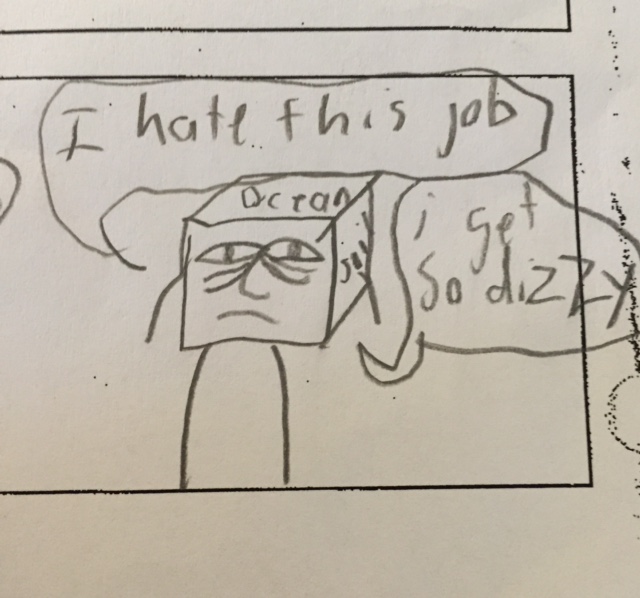
“Mrs. ATeam?” Gulp.  It was A1’s new science teacher calling to say “First of all….let me tell you I think he is hilarious. He made this cartoon strip ….” He then went on to disclose all the other things drenched in awesomeness while I was waiting for the “Second of all….” part. That part never came. He called me to tell me I had a cool kid. And that was it.

I am already too experienced with the school system to be naive. That same morning I had to send an email to kindly remind another teacher to carefully review A1’s IEP and Health Plan as there were some important things not being followed. Coincidence to hear from the science teacher the same day? Probably not. I am guessing he may have just been reminded that he had a kid in his 4th period class who has an IEP and a Health Plan. Maybe not…but as I said, doe eyed ingenue does not work as well with crows feet.

Unfortunately, what struck me most about this amazing phone call is that in the 3 years that my younger A2 has been in public school…my very speech impaired child…I have never ONCE received a phone call from a regular ed teacher just to tell me about his day in their class. And let me be clear about 2 things. Real clear since this won’t apply to everyone.

1.   A2 tries to tell me about his day. Every day. And we CANNOT understand him.

2.   I have ASKED  for communication. Over and over. Every year. In front of other people. To almost no avail.

So teachers…this advice is completely free of charge. The key to keeping us special ed parents at bay.
1. CONTACT US FIRST: Before school even starts, call to introduce yourself and ask about our kid. Give us your contact information. Assure us you are the extra eyes and ears for a kid who has no voice.
2. DON’T ASSUME THE INTERVENTION SPECIALIST IS JUST TELLING US EVERYTHING. My kid has a whole 30-60 minutes a day of direct IS time required in his IEP in our high-end-award-winning-district. My severely learning disabled child. The paraprofessionals who are with him most of the day are not permitted to communicate with me directly due to their classified employee status. We often get second hand info from our IS that sounds something like “had a great time in music class learning new songs”. The small tidbits we do get…well…that’s all…that’s ALL we get to know. The nuances are never there for us…if they are making a new friend, if someone hurt their feelings if they thoughts something was cool or interesting. And those things are definitely happening in my child’s world and no matter how hard he may try to share those things with me, if I have no context, I will not know at all what he is telling me let alone what questions to ask. The paras also are not allowed to attend IEP meetings even at my request. Were you aware of any of that? A2’s Intervention Specialist has 10 kids who can’t tell their parents anything about their day. She is ALL of their voices….and she is trying very hard to be all knowing by being the 3rd party communicator. But why? This is a team approach. While you do have 25 kids in your room, if they are lucky and have parents who actually ask them about their day, their kids can tell them. You have so much you can tell us and I guarantee all of us want to know.
3. INVITE US IN: To volunteer, to be a fly on the wall, to talk about our kids to your class. Did you know that neither you nor any of his other caregivers during the day are allowed to divulge any information regarding our child’s diagnoses to the other children due to HIPAA**?  And there are SO many questions from children aren’t there? If you have an inclusive classroom, the information a parent can provide the children can be invaluable to the inclusive environment. Offer to include the IS to help that parent if they express interest but are uncomfortable. **IMPORTANT DISTINCTION:  FERPA (Family Educational Rights and Privacy Act) any information that is directory information is ok to give out.  So If a parent is asking for another child’s last name or to get in touch with another family, that is not confidential information if the family did not opt out of directory information.  You just can’t tell us the child is on an IEP or anything regarding diagnosis.
4. RECOGNIZE WE UNDERSTAND YOU ARE BUSY: We are not out to get you or have a “gotcha” moment. I cannot imagine being a teacher right now. Huge classloads, jobs dependent upon test scores that are dependent on more than just your ability, differentiated instruction, outliers flying under the radar, helicopter parents, uninvolved parents. A 10 minute phone call once a month to tell us something we wouldn’t know without your call. If you do that once a month without fail you will likely never hear from us. But your principal will almost definitely hear from us. To hear how awesome you are.
5. INCLUSION AND INTEGRATION ARE DIFFERENT: This doesn’t mean let them also have a desk and have peers help them hang up their backpacks (though we recognize the value in that too). I mean if you take a picture of our kids to put on a bulletin board make sure it is a good one like everyone else. If you are in reading to the class and you ask a question the other kids can answer, figure out a way to ask a question that could include our kids’ ability to answer. While you have kids who can fall through the cracks, ours have absolutely no way to mountain climb out of those crevices without you. I am sure like us you don’t want them just to be a warm body at another desk. Ask their IS for strategies…that is why they are there.

BONUS #6 also at no charge: THE MOST DIFFICULT PARENTS ARE LIKELY YOUR BIGGEST ALLIES: Yep. We are the wave makers, the getter-doners. We figure out what you want and need and we try to get it for you especially if it will benefit our kids. Sometimes you don’t even need to tell us what that is. We figure it out. Assume nothing regarding our motivations.

For those of you who went into regular education vs. special education–those days are long gone. Inclusion is not just the responsibility of your Intervention Specialists. Much like us parents of kids with special needs…we started out in the exact same place as all the other parents in your room. Maybe even as you did too as a parent. Our journey veered off years ago but the desire to get to know the same thing we would have if everything turned out as expected has not.
The Tail Wagging the Dog: Tales of a Therapy Dog by a Bone Tired Mom

FullSizeRender(4)

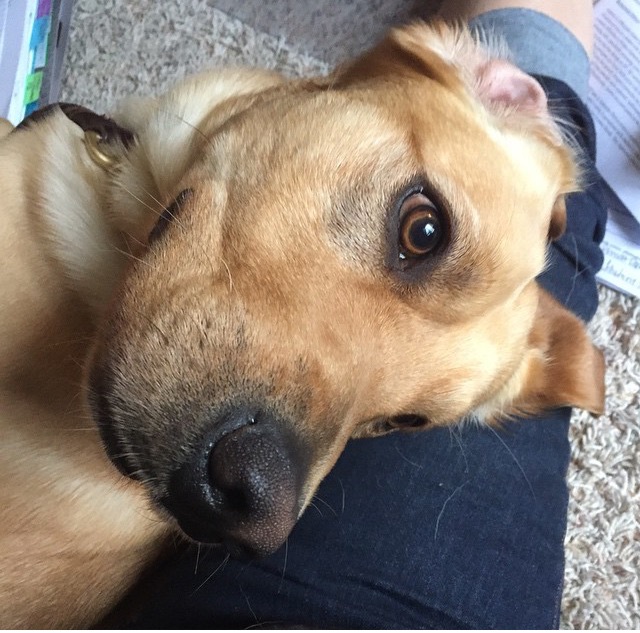
Our dog is a bit of a sonofabitch.

He is playful and fun and sweet and well behaved.

Until he is not. And it always catches us off guard. 30 rounds of chasing the ball and joyfully bringing it back is often followed by a random and somewhat humiliating drive-by where he passes me up, runs 3 yards over and pees on the neighbor’s dog. The ability to look nonchalant and nonplussed at the same time after your dog just defiled someone else’s beloved pet is something that only the parent of a child with Autism can pull off with Merylstreepworthy street cred.

These times I breathlessly call his name while chasing him in circles with what I believe to be an audible background soundtrack of the Benny Hill theme song, I will often submit myself to the idea of giving him back to the service dog agency. Wally came to us in a somewhat miraculous way. I relinquished the idea of a service dog for A2 years ago when I learned that an application was only the first step in a lengthy and costly fundraising and training endeavor–a cruel (but necessary)paradox for a middle class family supporting a child with a disability. So when I saw a post in a local Facebook mom’s group about this agency’s need for foster families for their breeding program it was a no brainer. He had been through an advanced training program, came with the bright orange “do not touch” vest (that as it turns out that as a whole people just ignore) and most importantly, neither of my children reeled away from him in fear of barking or jumping. I could get used to having to drive out to the agency on a moments notice for his doggie duty or the fact that as an intact male he has a certain
“je ne sais quoi” that at times makes me feel uneasy explaining to groups of gathering and inquisitive elementary school kids.

While this dog is not trained specifically for A2, I had notions of things. Wonderful things. He would have the gumption of a sheepherding dog and rustle A2 back off to bed at night allowing all of us a full nights sleep. He would have Lassie-like receptive and expressive language skills to alert us if A2 wandered off…or fell in a well….or were lost in a canyon. He would be A2’s best friend and would play ball, endure endless tummy rubs and kiss away tears. But alas, Wally is not trained to endure colossal meltdowns or high pitched screaming  and A2 is obsessed with Wally’s nails needing trimmed and is also wholly mortified by his noisy and explicit grooming habits.

It often feels more like they are roommates who met out of necessity on Craigslist.

We wanted Wally to be for A2, but really, we wanted him to be for us. We needed extra eyes, extra sleep and fuller hearts knowing A2 had a friend. But its not looking like this part was meant to be.

The surprise twist here is that I did not anticipate that Wally is here for A1. We didn’t see that one coming at all. I have watched A1 learn to use inflection in his voice to get him to follow a command or gain his attention. Wally’s presence is forcing A1 up out of his gaming chair to take him on walks or throw a ball or frisbee. He is quickly using perspective taking in a way I have never noticed in questions such as “Do you think Wally likes me? How can you tell?” or “Mom, I feel so bad. I wish I could give him some of my sandwich. Is this how you feel about me with my Celiac when other kids are eating gluten around me?”

My beautiful, slow to warm boy who would rather not touch or be touched is slowly but voluntarily petting, patting, feeding and cuddling Wally. Though it took me years to understand and accept that A1’s needs and worldview are just very different than mine, I have always known that forcing my motherly agenda would only reinforce his discomfort. And in a very rare moment–maybe the second time in his life just last night while watching TV he scooted closer to me on the couch, leaned in, and rested his head on my shoulder.

So Wally, you are off the hook. I will humble myself as I once again issue the world’s most awkward apology and assure the neighbors that we have no intentions of keeping their dog since you have clearly claimed him as your own just as long as you keep doing the stealthy, stellar job you were given to do here with us.

Autism Awareness Month: Y is for Youth

day 25

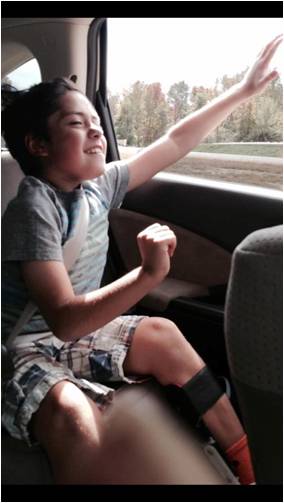
The sticky wicket of Autism. There are some moments I feel particularly lucky for autism. Those moments I watch slip away from my friends who’s babes with bountiful curls framing cherub faces ask for the straightening iron ……who have their gossamer wings clipped to keep their feet firmly planted on the ground….who no longer rub the wonder of dreams deeper into their eyes when they are sleepy….I would imagine it’s the bittersweet joy of having children…watching the transformation from innocent Angels to inhabitors of earth. I get to cavort with an angel for longer. I still get to hear a gasp followed by “look mommy…moon!”. I still get warm snuggly visits at 3AM. Bubbles are still magical. Raffi is still the only fully grown man who can sing wheels on the bus and get a rousing sing a long at our breakfast table. A2 can still do interpretive dance in the aisle at the synagogue during prayer while onlookers smile and nod as if it is part of the service. But it’s not for much longer….as those other children blossom from midlings to Ivy League applicants….A2 will likely still ask for The Muppets or try to squeeze himself onto a tricycle or squeal “go faster daddy!” as he coasts down a hill on a tandem bike….the promise of youth in the body of an adult where looks from strangers will fade from smiles when asked “what’s your name”. It’s not natural to pray you outlive your child….but we both agree as long as there are songs to be sung, dances to be danced and bubbles to blown we will move with him and try to always see the wonder of his world.

Autism Awareness Month. X is for X-Ray.

Day 24

Sensory differences are a common symptom of autism. Often kids on the spectrum can become overwhelmed by these differences. A1 tells me that a public toilet flushing sounds like a bomb going off and for several years he avoided public restrooms. A2 flaps his arms and locks out his knees whenever he is filled with anxiety….kind of his virtual rocking chair….or else he is just hoping to fly away from the dentist/barking dog/hand dryer. As autism-folk we try to build awareness by creating overwhelming scenarios to get NTs (neurotypicals…yes, we have a name for you) to sympathize the plight of the kid flicking his fingers in front of his face as a way to stop having his eyes taking a million pictures at once or the kid who is pacing because he can’t tell where his body is in space. But sometimes, I am fairly certain that some of those sensory integration differences are not experienced in a negative way and sometimes there are common things that just look, sound or feel like something not of this world…..if I could only take an x-ray of A2s little mind and see what he could for 10 seconds….. (…and feel free to smile at this picture….)

Autism Awareness Month. W is for What It’s Like

Day 23

W is for What It’s Like

“There is grandeur in this view of life…..from so simple a beginning endless forms most beautiful and most wonderful have been and are being evolved”On the Origin of Species, Charles Darwin.
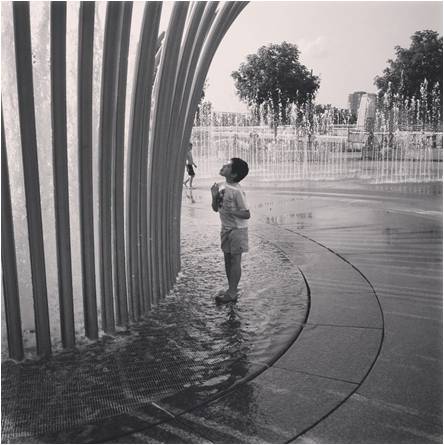
A few years ago I attended the funeral of a friend who suffered and died much too young. He was a scientist-a biologist, an activist, a researcher who was respected in his field and likely the smartest person I knew. He was also pedantic and opinionated with a biting but funny sense of humor. This combination engaged even the most simple of us but most of his friends were equally as interesting and I got to numbly stand in a room in Vermont in the dead of winter surrounded by them. “What’s it like?” a friend of his asked me…”having a child with Autism?” For a moment I just thought I was not in the mindset to answer that question but quickly realized I could NOT answer because in all the years I’d not only never been asked that but also never considered it either. It was the kindest thing anything had ever asked me about A2 and perhaps it was the somber tone of the day that rendered me without speech (which if you know me well does not happen often) or maybe I had always been so caught up in the action oriented nature of having a young child with autism that to contemplate that would stop me in my tracks and make me crumble….or perhaps in the moment I felt guilty for even thinking I would crumble and considered myself so lucky to still have those I loved around me regardless of circumstance while my best friend was grieving the loss of his partner……so I excused myself instead. What I have decided over the years is that it is a bit like A2 contemplating this fountain. It is weird and fascinating and wonderful and I have no idea how it really works or how it got there. I notice every single droplet from the ones that predictably slide down the posts to the ones that spit out to collectively leave me standing in a cold puddle over time that leave my toes numb without notice until its too late. There is no warning when the water will turn to an exciting spout of beauty creating a soft rain and visible rainbow or when it will create bursts of rainy arches that I cannot immediately escape leaving me far more drenched and colder than I want to be and on opposite sides of the fountain from whomever was standing near me. So Trevor…..that is what it is like……Thank you for asking

Autism Awareness Month. V is for Village

IMG_8068

Because we are so immersed in this world of autism I have erroneously concluded that everyone who lives outside of this Village is already aware of autism. However, there is a secret sorority that exists…one equipped with a secret handshake and password. I am in that sorority yet have no recollection of agreeing to join. Autism is funny like that. The Village of Autism parents is a unique one. We are a motley crew of individuals whose path may have never crossed otherwise. We meet each other in waiting rooms and lobbies of doctors offices instead of in the PTO. We have closed blogs and Facebook pages instead of casual phone calls. We learn more about the newest treatments and resources from each other than we do from professionals. We talk about how well our child is pooping quicker than we will discuss how well they are doing in school. Though we are typically the least able to, we are often the first responders to others in the Village because we are more likely to reach out to one another than we would outside of the Village where no one speaks our language. And we find each other….everywhere and all the time. Today while sitting on the floor in the middle of the children’s shoe department feverishly tearing inserts out of shoes and hopelessly attemping to shove A2’s newest orthotics into them with no success I broke down and cried. Just sat there in the middle of the floor, surrounded by ridiculous shoes with flashing lights on the soles and sobbed like a toddler might who couldn’t find the shoes she liked. At that same time, I peered up to see a woman pushing a cart with one hand while calmly using her other to push her much-too-large child who was humming loudly down back into his seat. We made eye contact for a single moment and silently nodded–her nod seemingly said “Yes….I know those orthotics were made wrong twice before in 7 months and represents 6 visits to the clinic over that same time. Yes…..I realize this is the 3rd store you have been in today that absolutely does not carry shoes your 9 year old can wear with the braces he must wear on his feet. Yes….I realize that your tears are really about your kid and the pain and blisters he will probably have again that he can’t communicate or the weird, white 1960s Frankenbaby shoes the orthotics company will recommend that look nothing like what his school friends will be wearing. Yes….I see you….and I know you see me….” V is for my Village. The quiet, connected Village where my family lives.

Day 21 Autism Awareness Month. U is for Ubiquinol

Day 21

U is for Ubiquinol

(originally posted 4/2015)

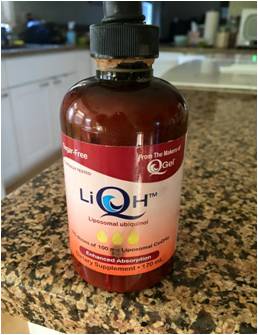
If you have heard this word before it is likely that you are either are a biologist or have a child with a mitochondrial disorder. In our case, to be sure….I am not a biologist. There is mounting evidence that autism and mitochondrial disorders at least co-exist in many cases. Mitochondria are organelles in almost every cell in the body and are considered the powerhouse of the cell. The mitochondria break down chemical compounds into energy and put it back into the cell for use. When there is a breakdown in the mitochondria factory, it cannot produce enough energy for the cell which can result in cell damage or death. This damage tends to affect larger organ systems such as the brain, heart, endocrine system, gastrointestinal system, kidneys and respiratory system. (As I mentioned….I am not a biologist..that’s about the best I can explain). The first time after 9th grade biology I heard about ATP or mitochondria was sitting in a neurologists office with A2 when she cocked her head and said “I need to send him to the Cleveland Clinic….I think he has mitochondrial disease…I am so sorry….”. I was confused–“Ok”, I said and left the office feeling optimistic that maybe we figured out why my baby completely stopped physically growing or gaining weight and developing. If we know what it is….we can treat it, why was she apologizing? But as it turns out, there is no cure and no real treatment for mitochondrial disorders. These disorders also tend to be progressive in nature so we must try to protect the mitochondria to the best of our ability using supplementation (thus the Ubiquinol CoQ-10) and body system balance. Under a microscope, A2’s mitochondria are oddly shaped..and there are a whole lot of them…and this hastened the question did some disease process or environmental assault cause this problem….or did he inherit it from me (mito are maternally inherited)? If something happened, what was it? Did I eat too many pesticides on my produce while nursing? Was his immune system down when he got a vaccination? Was the rated “F” water in Las Vegas where he was born full of toxins that damaged my baby? I am rational enough to know that there was nothing I could have done about my own mitochondria nor could I guess exactly what environmental assault would have caused such a huge problem…but it is here. And I now know why the neurologist apologized to me on that warm, blue skied summer day back in 2006…..

Autism Awareness Month. T is for Teachers and Therapists.

Day 20

 T is for Teachers and Therapists

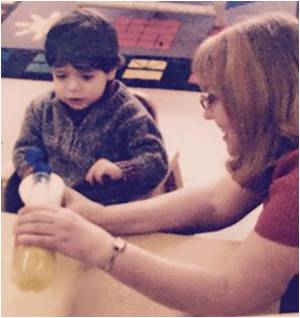
112. A2 has had a total of 112 different teachers and therapists in his short 11 years. Some were hand- picked….some chosen by fate and luck of the draw. Some were published…lauded recognizable names….some were quiet presences of whom I cannot remember their names. Some have been with us for the majority of his life. Some have only jumped in for a blip of time in his almost 105,000 hours on this planet. Some were stellar….life alterers….some just showed up because they had to. Some interpreted my coolness or seeming indifference to them as being non-caring. Some recognized that I always had my child’s best interest in mind all the time and understood it was important for me not to be too attached for fear of losing perspective and not holding them accountable should his learning derail. All have had a permanent impact on my entire family’s lives and for all of them, I am grateful.  When reading this post today–please help me help a few whose lives are difficult right now–Debbie Jo Pierce (pictured above) was one of the first paraprofessionals to work with A2. She has given most of her life to helping others and is ill with cancer leaving her unable to work and without income. Please consider today to donate to a Gofundme account started for her to help ease her burdens. Also, if you are of the praying sort, please like the FB page for Pray for Rachel. Lauren Sullivan, a favorite home team therapist of A2 15 year old sister Rachel is in Nationwide Children’s Hospital being treated for cancer. Rachel is her heart and soul –a child of strength and character. I am only one person–Christmas gifts and thank yous always seem so trite in the face of what we ask of the professionals who help us. Can you help make an impact for 2 of them today?

**This post has been updated since the original post  in April 2015, Debbie Jo passed away..taken too early in this world, yet someone must have felt her job here was done….and what a job she did in a quiet world where her time impacted so many.  Rachel Sullivan has made a full recovery and is enjoying school, family, sports and her community.

Autism Awareness Month. R is for Relationships

Day 18

“Are you sure he has Autism? He’s so friendly…”

While there are more nuanced aspects now to the criteria, failure to develop peer relationships appropriate to developmental level is one of the defining and most obvious diagnostic identification for children with autism.

Interest in people in general, desire for friendships and loving behavior can muddy the diagnostic waters and confuse people about what autism is and what autism isn’t.

Disconnectedness, aloofness and lack of desire to be touched does not always translate as a lack of desire for relationships. The desire is there, the understanding for how that happens is not. It can just be easier to be by yourself. A1 can tell you that.

Indiscriminate friendliness, hugs and kisses to those he loves and the compulsive desire to be around a lot of people doesn’t always coexist with developmentally appropriate social skills. A2 probably would tell you that part…if he could. He is just as likely to enthusiastically greet a stranger in a public bathroom as he would a child at school he knows well.

A2’s splintered play skills had to be taught like you would teach a typically developing child how to read. And he has missed many steps in this such as building with blocks and representational play. This spectrum of deficit in social interactions makes it much like I am raising 2 only children.

A2 wants nothing more than to play with A1, but has no idea how to engage in some of the more rigid independent activities he is playing.

A1 wants nothing more than to play by himself because he has no idea how to model the back and forth necessary for that interaction to work if it is not an activity of high interest.

I believe they love each other…but much of the time it is like they are drifting in separate rafts in a tumultuous sea of desire for one another’s companionship without oars the to paddle over to each other. Sometimes their boats coincidentally bump. It is those moments as a mom I see a glimmer of typical sibling antagonism, tattling and sometimes even a game of Connect 4 and hope that they both hold on to each other’s rafts and paddle to shore together one day.

Autism Awareness Month. Q is for Quirky

Day 17

“Why does he do that?” A common question for parents of children with autism. There is no easy answer for that in a global sense given each child with autism is as unique as any child without autism. Many times it’s because the wires are crossed neurologically causing some kids like A2 to perceive things in the world differently. Licking a basketball before he shoots it, flapping his arms whenever he is excited or anxious or hooting loudly when he sees something interesting….try thinking instead taste sometimes is like balance, repetitive movements are calming to the body and noise is quicker that coming up with words. Sometimes the quirk comes because the part of the brain responsible for things like memory, the time it takes to process information and the ability to take another persons’ perspective has a blip and experiences the world in the same way much like A1. Someone just said to me “I always thought he just marches to the beat of his own drummer”. And he does. They both do. My kids are as they are and as they should be but at the same time they do need to be functioning and hopefully contributing members of society. Sometimes though, to watch the struggle of loneliness because others don’t understand is painful and hope that I am projecting my own anxiety and that they are more resilient than I give credit for. This unique and quirky nature of autism makes my guys who they are…..and they are perfect to me. Perfect…and different, not less….