The Mending Wall

IMG_6047These wildflowers grow on a narrow strip of grass between someone’s property up against a century old stone wall and a city sidewalk near my home. There is a handwritten sign on a stake stating simply PLEASE DO NOT MOW OR SPRAY WILDFLOWERS. THANK YOU. While seeing them in full bloom one might wonder why someone would do that even when instructed to.

Today we were shaken again to our core. Today we were reminded again that nothing should be taken for granted. I am angry that again I feel afraid for my children when they leave the comforts of home.  I am conflicted because A2 is sick and at a time I should be saddened for 50 families and frightened at the fact that laws continue to exist that allow for permits for individuals to decide the fate of 50 people in one rain shower of shots. People who were given the right to exist with equal love are gone and we are all reminded there is still an opposing view.  But A2 is the kind of sick that makes his father talk in circles and makes me stone faced and logical. The kind of sick that sinks our instinctual fears as parents until the wind kicks up again and fills our sails to let us know it’s smooth waters soon. I can’t fear all things at the same time.

So I can stop to show you these flowers I saw today. And you can stop to see them. And we can all appreciate that someone stepped up to make sure that they bloomed to their full beauty for all of us. Please see them. Just for this moment. ‪#‎onepulse‬  

On the Eve of Your 11th year…..

FullSizeRender(12)

Your brother saw the ocean for the first time about a month before we knew you.  The expanse stopped him in his tracks leaving him silent and still.  The moment you were born 11 years ago today you cried and screamed and when they held you up for me to see I instinctively whispered your name.  You stopped crying, found my eyes  and you were silent and still and you took my breath away.  Your presence in our lives has been like seeing the ocean for the first time–beautiful and tumultuous and every day is like seeing the world in a way no one else gets to.  I feel lucky I get to be your mom.  Happy Birthday sweet A2…….

The Gorilla in the Room…..

There have been so many news stories, articles and commentary on social media about the tragic situation over the weekend that at this point I am fairly sure you would have to live in a cave to not have at least heard about it.  In case you do live in a cave, here is what I know about the situation with the little boy who fell in the Gorilla exhibit in Cincinnati:

  • He fell 10 feet into the moat
  • He fell 12 feet into the moat
  • He fell 15 feet into the moat
  • He was seriously injured but with non-life threatening injuries
  • He came out without a scratch
  • The gorilla rushed him but did not hit him
  • The gorilla approached him cautiously only after hearing him splash in the water
  • The gorilla did not intend harm, he almost seemed to be protecting the boy
  • The gorilla violently was dragging and throwing the boy in the water
  • It took 10 minutes before anything was done by rescue team
  • It took 15 minutes before anything was done by the rescue team
  • The boy had his hand in his mother’s back pocket to stay close and in a flash he was gone
  • The boy’s father crawled out onto the ledge to jump down into the moat
  • The person who filmed the footage crawled out onto the ledge to jump down into the moat
  • Eyewitnesses say she was on her phone and not paying attention until they saw him in the water
  • Eyewitnesses say the boy was gone in an instant and he was seen crawling out onto the ledge and was pursued immediately by family and spectators alike

From reading up….here is what else I know:

  • Jungle Jack Hanna supported the zoo’s choice to kill the gorilla because there was no other realistic option
  • A large part of the community did not support the choice to kill the gorilla and sees the tragedy of killing an innocent endangered animal because there were other options
  • A large part of the community ponders how in the world the zoo could have such an unsecured area that a child could breach it that quickly
  • PETA did not support the choice to kill the gorilla OR have him in captivity in the first place for our entertainment
  • A child slipping away from a parent can happen to anyone in an instant
  • The mother is completely responsible for the death of that gorilla, is a neglectful parent and clearly was not watching her child and should have him removed from her care to be raised in foster care.
  • The mother has received several death threats
  • A gorilla is dead and a boy  is alive

And lastly….here is what else I know:

  • A 4 year old boy is alive
  • NOTHING.  ULTIMATELY, I KNOW NOTHING.  AND NEITHER DO YOU.

Yes, its a tragedy no matter what.

IMG_5405

Not gorillas…..I know….but I own the image.


It’s Not Your Mother’s Mother’s Day

FullSizeRender(11)

To my children on Mother’s Day:

You did not ask to be born.  You did not ask to walk this earth and you certainly did not create your own realities and struggles….at least not yet.  You did not get to choose me as a mother.  I can guide you in ways that I think will ease your journey but ultimately your external successes and failures will be YOUR successes and failures.  You get to have those on your own and I will rejoice and celebrate and swell with pride as if I created those monumental moments but I do not get to take credit for those.  I will feel guilt or shame or sadness in your failings or perhaps I will distance myself from them for those same reasons, but ultimately I don’t get to take credit for those either.   Whatever respect or love you have for me through each stage of your lives is created, taught and fueled by me and  while those things feel like an expectation when it comes to a mother, in every other situation those things are earned….I will assure you it is the same in our case. It is not my expectation that you celebrate me today.  If anything, the onus is on me to celebrate you.  You made me a mother and by proxy after 35  years I was given the gift of the ability to feel love unconditionally.  I don’t choose to love you…..I have no choice.  What I do with that part is up to me. You do not owe me for being attentive to your needs, by making you a priority.  That is my contract with you regardless of circumstance.

So on this Mother’s Day, I celebrate you both.   The loves of my life.  May you:

–Never feel as if your existence was a burden to me.

–Always feel like a joyful priority, even when I have forgotten to appreciate that myself

–Recognize that you are separate from me….that my sadness is not your sadness…my expectations should not be your expectations, my disappointments are not your disappointments.  If I am doing this right, I will not feel like your obligation.

–Know that in my humanity the above might not feel that way because nothing makes me feel more joy than your joy….nothing makes me feel more worry than your worry…and unfortunately there is not much I can to about that.

–Never feel less because I acknowledge your differences.

–Always feel safe in telling me your thoughts and ideas no matter what.

–Know that when I don’t understand your needs that you may not be able to change that but you can ask me for more patience

–Always feel the love and respect I have for you and I hope that I have done my job in teaching you how to have the wisdom to distinguish and create healthy distance as you grow when others are not treating you with love and respect who should be.  Including me.

–Know that if I am feeling selfish or if I cannot manage something when it comes to you I will protect you from that by being honest so you never misunderstand my intentions.

If I am raising you right, for me every day should feel like the holiday we are told is Mother’s Day.  But for today, I celebrate and thank you for being given the privilege of being your Mom. Now let’s get to the Zoo.

xoxox


Day 21. T is for Teachers and Therapists.

Day 20 2016: T is for Teachers and Therapists

Jaycee Kemp's avatarRunning through Water

Day 20

Day 20:  T is for Teachers and Therapists

97. A2 has had a total of 97 teachers and therapists in his short 9 years. Some were hand- picked….some chosen by fate and luck of the draw. Some were published…lauded recognizable names….some were quiet presences of whom I cannot remember their names. Some have been with us for the majority of his life. Some have only jumped in for a blip of time in his almost 80,000 hours on this planet. Some were stellar….life alterers….some just showed up because they had to. Some interpreted my coolness or seeming indifference to them as being non-caring. Some recognized that I always had my child’s best interest in mind all the time and understood it was important for me not to be too attached for fear of losing perspective and not holding them accountable should his learning derail. All have had a permanent impact…

View original post 228 more words

Day 18. R is for Relationships

Day 18 2016: R is for Relationships (originally posted 4/2015)

Jaycee Kemp's avatarRunning through Water

Day 18

“Are you sure he has Autism? He’s so friendly…”. While there are more nuanced aspects now to the criteria, failure to develop peer relationships appropriate to developmental level is one of the defining and most obvious diagnostic identification for children with autism. Interest in people in general, desire for friendships and loving behavior can muddy the diagnostic waters and confuse people about what autism is and what autism isn’t. Disconnectedness, aloofness and lack of desire to be touched does not always translate as a lack of desire for relationships. The desire is there, the understanding for how that happens is not. It can just be easier to be by yourself. A1 can tell you that. Indiscriminate friendliness, hugs and kisses to those he loves and the compulsive desire to be around a lot of people doesn’t always coexist with developmentally appropriate social skills. A2 probably would tell you that part…if…

View original post 217 more words

Day 10 2016:J is for Just Ask

IMG_4894

J is for Just Ask

When I sat down every day last year to do this A-Z project, my biggest take away was the candid responses from friends and acquaintances.  Many of whom told me they wanted to reach out, but didn’t know what questions were ok to ask.

I understand that on a few levels:

  1.  As an inhabitant of this earth, when we see something we don’t understand or is different, we feel compelled to want to know the “why” or the “what happened”. Perhaps its part of the survival instinct-  A primitive way to avoid something that is contagious or preventable.  So, often times when it’s not thought about and someone approaches me and says, “what’s wrong with him?”, my instinct is to say back, “rude people are what’s wrong with him”. When I shift my schema and recognize that even in those awkward moments there is the possibility to make it teachable, I can have a lot more empathy for the individual asking.  After all, I am not sure I am that much more comfortable with a stranger asking me a more direct question either. (ie: “why is he making that hooting noise over and over?”when really I might have absolutely no f-ing idea myself in the moment but I would very much like it to stop).  Parents–whether we like it or not, we are the conduit to bridging our children with this society Many of us are their voices. Even if one person out of 10 who ask are asking to be nosy or rude, if we do not respond as an advocate, we make the assumption that all people who ask in that way are being nosy or rude.  So, instead of “mind your own business” or “whats it to you”, maybe try, “I think what you meant to ask is that you notice that he can’t talk.  This is his speech generating device, would you like to see how it works?” or “My child can understand everything you say and the way you asked that in front of him makes me uncomfortable.  There is nothing wrong, but it seems like there is an aspect of his behavior that you would like to know more about.  He has Autism and maybe one of us can tell you more”.  Pollyanna much?  Sure, but the only way we will change the asker’s behavior is by gently alerting them to the problem, offering a solution and giving them a reality check.
  2. On occasion, people want to ask how they can help. More times than that, people don’t realize we need help.  For those of us who have kiddos who don’t have a obvious trouble in the community, we move along to normalize our experiences. I have been told that I give off the air of having everything under control and that I don’t need anything.  Part of this is for my kids benefit. No one wants a hot mess of a mom in public.  Another part of this is because as my job as a therapist in this close-knit community, I feel like I need to maintain a balance of vulnerability and strength. The hot mess part needs to ride in the back seat to ask “are we there yet?”.  There are other parents whose kids CANNOT safely be in public places.  So, you just don’t see those people.  Their life behind closed doors is like an invisibility cloak and they are not getting asked what they need for those reasons.  Frankly, many of us have NO IDEA what to tell you about how you can help. My family comes infrequently enough, that to dole out a honey-do list also requires having to walk them through where things are, etc. Ultimately, this means more work.  If there were an emergency, they are not enough of a trained listener to know what my child needs if he tells them.  When a friend asks if they can watch my kids so we can get out…well, I still haven’t figured out exactly how one explains that you can’t imagine asking them to change a 10 year old’s diaper ….or telling them they probably won’t get to sleep through the night and must keep one eye open when they are sleeping.  Sometimes people ask to help but they just don’t want to do what you do need. Their perception becomes that you are unreasonable. It is your own fault you are not taking their help.  All can serve as barriers to asking the right questions or giving the right answers for assistance.
  3. People make assumptions instead of asking at all.  Just the other night, a young woman I work with asked me for advice in a situation about a member of her not-for-profit youth group. This teenage girl has Autism and when the entire group is together she tends to get very dramatic and will end her tirade by running out of the room.  This young woman sighed and said, “She only does it in big groups. Obviously attention….we are thinking of ways to let her know that maybe this group isn’t a good fit for her. It’s not-for-profit, so we can’t tell her she can’t be part of it.” We discussed the fact that perhaps they were misreading the function of the girl’s behavior.  The consequence is what sustains the behavior– if no one is rushing out after her, what is the likelihood that this behavior is to get attention and not escape or something internal due to the stress of being in a large group?   She wondered aloud if they should contact the girl’s mother to try to figure it out.  I wondered aloud what would happen if they just asked the girl herself, since she is her own expert.  Use the time and energy to find out what she needs to be a part of the group in a way that works for her rather than using that energy to figure out a way to help her move on.  We cannot help but to look at others using our own lenses.  But sometimes our lenses are smudged, are rose colored or even broken.  By not asking in this kind of situation, others assume they know what is best.

Lets face it. It’s uncomfortable to ask about people who are different than we are. 

We may be curious, afraid of coming off as rude or misread other’s cues.  We may not want to know the answer, we may not want to change our own ways.  We may already have assumptions and think we are right, we may be uncomfortable due to our own scripts about social norms, or frankly, some of us…we may just not care. 

For those of us being asked, we may be offended, we may be hurt, we may not want to talk about it.  We may not know the answer, we may not want to admit to an issue or call attention to it or we may not want to be reminded.  We may not want to be rejected. 

So let’s all agree on something. Asking and telling can suck at the outset.  Let’s move past it.

Those of us who are Autism Families…we ARE the awareness. How you choose to let that manifest is up to you.  In my world, however, if you ask me, I promise to tell you.

5 Pros and Cons of IDEA: What Every Parent (and educator!) Should Know

IMG_4868
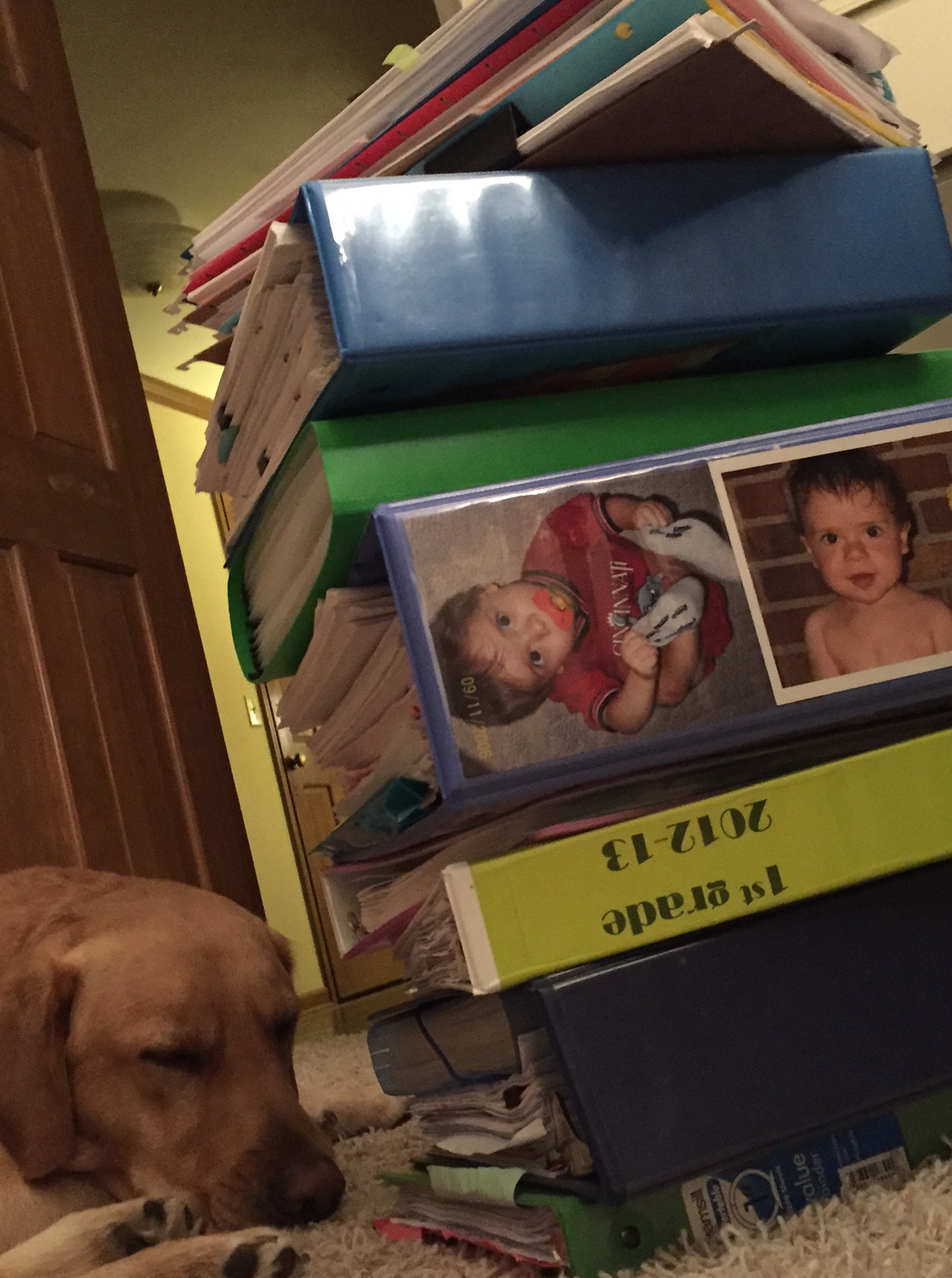
This tower is 4 years total of educational paper work for 2 kids and represents approximately over 300 hours of meetings, evaluations, reading and combing over data….JUST AS THE PARENT

I is for IEP, IDEA and Inclusion.

These three “I” words have forever changed me as a person.  If you have a child in special education, you probably just had a shiver run down your spine just by reading those acronyms in print and may be thinking the same thing.  All of these things serve as a blessing and a curse to our kids…and also to the educators and administration serving them.  Back in the day, the Individuals with Disability Act (IDEA) was enacted to refine and replace what few laws there were to protect children with disabilities within the education system.  It was meant to also focus more on the individual rather than on the disability itself.  IDEA has been re-written several times since 1990.  There are several things it does both in a good way and also in not such a good way:

  1.   It provides a free and appropriate public education (FAPE) to all kids regardless of disability at public expense.  The key word here being APPROPRIATE. The downside: There is a pretty decent chance that what you and your child’s test scores say and what you know is appropriate will be very different than what the district thinks is appropriate.  And most likely because of that other key word….FREE.
  2. Evaluations:  This law makes sure that children with disabilities are evaluated in a way that makes sense.  We don’t want to use one specific test to decide if a child needs special education services.  That way  discrimination is prevented and ideally, these evaluations serve as a tool to know exactly what they will need educationally. The downside:  Evaluations are only as good as the people trained to administer them….and only as good as the educator who can recognize an issue in the first place.
  3. Individualized Education Program (IEP): These are legal documents that establish goals, accommodations and modifications to the general curriculum and access to qualified professionals to ensure that a child with a disability is learning at the right pace and to his ability within their environment.  These plans level the educational playing field for those with a disability.  The heart of special education.  There are 13 categories under which a child may qualify: specific learning disability, speech and language impairment, blindness, deafness, hearing impairment, visual impairment, orthopedic impairment, traumatic brain injury, autism, multiple disability, other health impairments, emotional disturbance, intellectual disability,  The downside: Because they are legal documents and may be audited and are monitored on a quarterly basis, educators may have a very high self-preservation incentive to make certain your child is meeting his goals….at least on paper.  The more savvy the parent, the more tricky this can become.
  4. Least Restrictive Environment (LRE):  This ensures that your child is placed in an environment that meets his needs as independently as possible in an educational setting that is appropriate for him.  The goal is to work toward the LRE.   The downside:  For those of us with kiddos with Autism, this is not always cut and dry.  Especially those who are cognitively intact but perhaps have a language impairment or another issue which may stand in the way of independence.  An emerging issue in the field is for those kids who are considered “twice exceptional” such those who are intellectually gifted but with severe behavioral issues.  And what does “least restrictive” mean anyway?  My kid who needs 1:1 to learn can totally sit in a regular classroom to do that.  However, I believe my district interprets LRE to mean that he be in a contained classroom without a 1:1 because then he might have more physical independence in that room.  Who is right?
  5. Protections for your child…..protections for you as a parent:  Because of IDEA, there are procedural safeguards in place to make certain that your child is receiving the services the school says they will provide and a protocol to follow if you believe they are not.  Additionally, these protections allow for parent participation and child participation as an equal member of the child’s school team. The downside: Let’s face it…if you are not an educator…or even know where to go to get what you need, you will never be an equal member of your child’s team.   Procedural safeguards and parent participation are ultimately only as good as the questions you know to ask, as your attorney and your bank account.  The catch-22 if you do live in a very good school district?  There is a good chance that anything that goes to due process is going to take a LOOOONNNNNGGG time.  And think about that for a second.  If there is a FAPE violation and it works its way all the way up to a due process hearing doesn’t that seem counterintuitive for your school district to allow little old you to go to court with them?  Wouldn’t it make more sense to fix the problem as it would be much cheaper and less time consuming to do so?  It’s not.  At least not to them.  Because no matter how much the school doesn’t want to throw money at something they can still probably afford to pay a better attorney for much longer than you can.  And besides…the year and a half it could take…perhaps that child won’t need what it was you were asking for by then…or make your life complicated enough that you will break and succumb.   That seems like a pretty good gamble for a district.  And then it doesn’t set a standard for other families to ask for the same.

The last 25 years have been interesting ones for the education system as a whole.  When the parents who walked before us clawed and fought and struggled for these laws it was at a time before the internet, before all the revisions, before standardized testing existed in the way it did, before No Child Left Behind and before Autism was 1:68.  IDEA is necessary no matter how you slice it, however it exists in a very different system than it did in 1990.  At this point I know a lot of the law like the back of my hand and the parts I don’t know I am now educated on how to find those rules.  I have a list of socio-emotional goals for almost every developmental issue at my finger tips and I have an entire community of people going through the same struggles I am at the click of a button day and night.  All of this has been achieved through this tiny-huge world we have online.  I know exactly the gap closure between special education kids and regular ed kids not only for my district, but for my school.  I know the 6 payment tiers that exist and the formula used to calculate how much extra funding my district for each of my kids for using special education services.  I know what belongs where on all 13 sections of the IEP and how to make a goal measurable. And I know when I am being BS-ed by my district.  I don’t know all of this because of my training…I know it because I live in 2016 and any parent with a computer and the desire can learn the same.   In 1990, my school district certainly was not expecting 1 out of every 6 children attending (or 15%) to have some sort of developmental disability….or for the Autism rates to be 600% higher.   My child’s elementary school currently has about 700 students and about 100 IEPs (last I heard)…all while serving about 29% of their students as English as a Second Language with limited proficiency.  Teachers are stretched thin. Inclusion and LRE are so important for our kids future, yet most regular education teachers were not taught the basics on how to include and teach special ed kids in differentiated instruction or how to manage a classroom where there are multiple children with conflicting accommodations. (ie:  When Johnny gets stressed, he can crumple paper…but Jimmy’s auditory sensory integration issues make it impossible to keep it together when he hears paper crumpling….).  Parents are communicating, educated and knowing the legal hoops to jump through if their children’s rights are being violated.  It is a system that cannot hold itself up and still serve our most vulnerable children to be the most successful they can be.  Parents…please keep fighting for your kids….keep learning everything you can.  Educators…please do the same.  I do not have the answer….I am just hopeful it is found before my children have to move on from the “protective bubble” of IDEA and there are no grown up IEPs.

Autism Awareness Month. G is for Genetics (and Guessing)

FullSizeRender(5)

G is for Genetics

I get asked often what I think caused my child’s Autism.  I believe it is completely counterproductive to even consider it until such a time that there is solid evidence.  They are here now. I love my kids fiercely. Our struggles would be the same whether or not we knew the ‘why’ part.

Infection in mother during pregnancy, vaccine accidents,  overweight in mother during pregnancy, gestational diabetes, inadequate iodine, diagnostic ultrasounds, prenatal stress, advanced paternal age at time of conception, pesticides both before and after gestation…I’ve read those all.  And they all have the same message:  “Dad….Mom (but more likely Mom)…you did something…IT’S YOUR FAULT.”   These theories are also part of what drives the Neurodiversity movement.  That is, that individual differences and biological diversity are a normal and natural part of evolution and Autism is no different, so it is not something to be treated. Behavioral disruption is misunderstood communication and all the comorbid conditions such as GI/bowel issues, intellectual impairments, mental health issues are just that. Something not related directly to Autism (a whole other can of worms within our community….).

Regardless of your belief system…there is only one thing we know for absolutely certain: NO ONE KNOWS WHAT CAUSES AUTISM.

To demonize parents who make decisions you would not necessarily make is also counterproductive. 

As parents we have an instinct to protect our children. When a parent watches the baby she knows slip away into a world of of silence or pain in front of her very eyes and no one can tell her why or really what to do..well….just take a moment to let that sink in regardless of your parenting/political/medical stance. I don’t have to agree, I just have to have empathy.

Here is what we do know.  There is a genetic component to Autism and it is likely paired with an environmental trigger.  Just like Type 2 Diabetes. You can’t develop this unless you have the genes.  You make it far less likely to get it if you get your butt up off the couch, exercise regularly and do not eat like a regular American.

We just are not 100% certain what that common genetic component or the environmental one in Autism.  I am not going to even pretend to know anything about genetics. The best I can do is tell you:

  1. Picture a city with 20,000 streets.
  2. Now lets figure out which streets have public mailboxes, one way traffic, standard poodles and single mothers living on them.
  3. Only some people who travel down those streets buy mandarin oranges (not regular naval) and we need to find those people.
  4. (But what about the naval orange buying people!? Those are a lot like mandarins!)

That is what it is like trying to figure out the common genetic factor and environmental trigger together. When I had a discussion about this with a pediatrician 12 years ago she said to me: “Autism is caused by a genetics. Period.  To consider anything else is ridiculous.”

I sat for a moment and thought about that.  I then I wondered out loud, “Can you tell me another genetic epidemic in history that unfolded like Autism?” Crickets. I’m a pretty moderate parent…however it is no wonder that many parents are suspect of the medical system with that kind of definitive statement when the bottom line is WE DON’T KNOW.

Does it mean my husband and I have Autism? No, not necessarily…but who knows?  If we do carry that genetic material and we combined it….we no more caused the autism than we “caused” their big gorgeous brown eyes or fact that they may need to wear glasses one day. Their eyes could have almost just as easily been blue instead all things considered.   And if environment did play a role and all the Fruity Pebbles I ate during pregnancy kicked those  genes into overdrive as the environmental trigger, there is not a damn thing I can do about that now.

I have never felt the “shame of blame”…and I don’t think any parent should.

We are wired to procreate and continue population.  We can just hope that this kind of information will one day find the link that allows children who suffer in silence or physical or emotional pain to grow to be independent and happy…just like all parents want their kids to do.

Day 4 2016: D is for Diagnosis

IMG_4731

D is for Diagnosis

By the time my oldest was 18 months old, I knew he had Asperger’s….but no one else seemed to know except for maybe my husband.  He spoke like an adult yet seemed confused whenever anyone asked him something directly.  (“He’s a genius!  Listen to him talk…he’s just busy thinking about other things”).   At Mommy-Tot class while all the other babies would watch with wonder as technicolor bubbles floated by, he was finding his way across the gym to open and close the door over and over. (“He’s a genius!  Bubbles are beneath his intelligence!”) And yes, he loved to go to the park….but would decide which park based on what kind of public toilet was there and then would spend the majority of his time in said toilet if allowed….and I would often have to threaten him with a consequence if he didn’t go and play (“He’s a genius!  He’ll be an engineer one day…he just wants to know how it works!”).    While he also never hugged or kissed me, he would let me do it to him.  I said “I love you” any opportunity I had but he never said it back.  He would let me sit down to play with him, but his back would soon be turned and he was playing on his own again.  His conversations often consisted of repetitive phrases over a video he watched over and over for months at a time.  The list could go on and on….but the fact was that he was not particularly disruptive, he was functional and he was so cute and tiny and spoke so well people mistook him for a quirky genius.   What was difficult is that we lived far from family and friends so when they saw him for brief periods they would just tell us we were worrying too much.  They would see the quirk for a few days at a time….not hours on end like we saw.  So when my youngest got to be about 8 months old and clearly had serious medical issues all concerns we had about A1 went to the way side.  My concerns were still there but again were also pushed aside by the pediatrician when I would bring them up (“Some kids are just persistent” “Drooling has just become a bad habit”)  It wasn’t until he was 7 years old that I had him tested and really, it was only because he was floundering at school.  I was being told that “some kids are average to below average”….the same kid just 2 years earlier everyone was telling me was a genius.  I had to see if he had a diagnosis in order to get him the assistance he needed at school…And sure enough….psychoeducational testing by a licensed psychologist showed what we always knew.  ADHD and Asperger’s Disorder.  A few years later I actually got a second opinion from another psychologist…and guess what….same outcome.  On standardized testing. Across settings.  Again.  He is definitely not a genius…but he is also definitely not below average.  A1 is the fall-through-the-crack kid.  His rigidity can be seen as defiance.  His poor social skills makes him look like a loner.  His attention issues make him look lazy.  And as the person who lives with him 24/7 I can tell you he is no more of those things than any 12-year-old.  He is a people pleaser and when he thinks he has failed at that he kicks himself over it.  Overall, A1 is going to be fine….but I believe it is because we have recognized the thing that makes him different…but not less.

A2 was not diagnosed until the age of 4 despite my husband and I and everyone around us knowing something was very wrong.  What was troubling was that when he turned 6 months old and I started him on solids…everything else stopped.  Except for the worst constipation I have ever witnessed.  He stopped growing.  Stopped.  Completely.  At one year he was about the same size and weight as he was at 6 months old.  He stopped developing but did not lose any skills.  At 12 months he was the same adorable little nugget he was at 6 months.  Was it possible I willed him to stay an infant?  What also did not change was his inability to stay asleep for more than 90 minutes at a time.  Down for 90…up for 2 hours.  This went on for 2 years and one day I got the flu and was out of commission for 10 days.  I had to let my husband get up with him through the night.  When I got out of those sweaty sheets after 10 days….it occurred to me that I was not clinically depressed as I believed I was up until that moment my body became an achy, hot mess….I instead emerged a new woman.  A rested woman forced to sleep by a virus.  A2 had already been diagnosed by a fresh muscle biopsy at the Cleveland Clinic with Static Encephalopathy with Mitochondrial Dysfunction….we got a scary letter to take with us everywhere we went.  We were told not to let his blood sugar drop too low.  We were told to keep him cool in the summer.  We were told to have a very low tolerance for fever and dehydration.  We were told he had an uncertain life span.

At about 2 years old when he started crawling he found that rubber stopper thingy  behind a door. Thhhhwwwaaaang! He’d whip his head to the side and roll his eyes.  Thhhhwwaang again.  Again with the head thing and eye rolling.  I remember my heart dropping to my stomach.  I remember thinking “oooohhhhh shiiiiittt”.  I knew that was a stim (self-stimulatory behavior). For the next 2 years I watched A2 develop at 20% of the speed of the rest of his peers.  He went from being the most social baby of the group and as his peers developed speech I watched him realize he was not part of the group…to standing by the group and watching everyone play….to standing out of the group and not paying attention to everyone.  To this day I believe it is not because he didn’t want to…but because he knew he couldn’t.  He flapped.  He screamed.  He stopped eating all solid food. He had no language other than the vowel sounds of babbles of a young infant.  But he was still sweet, and loving and laughed heartily.  He was finally diagnosed at 4 years old with Pervasive Developmental Disorder-Not Otherwise Specified (PDD-NOS).  The diagnostic version of “your kid has Autism…mostly…”.

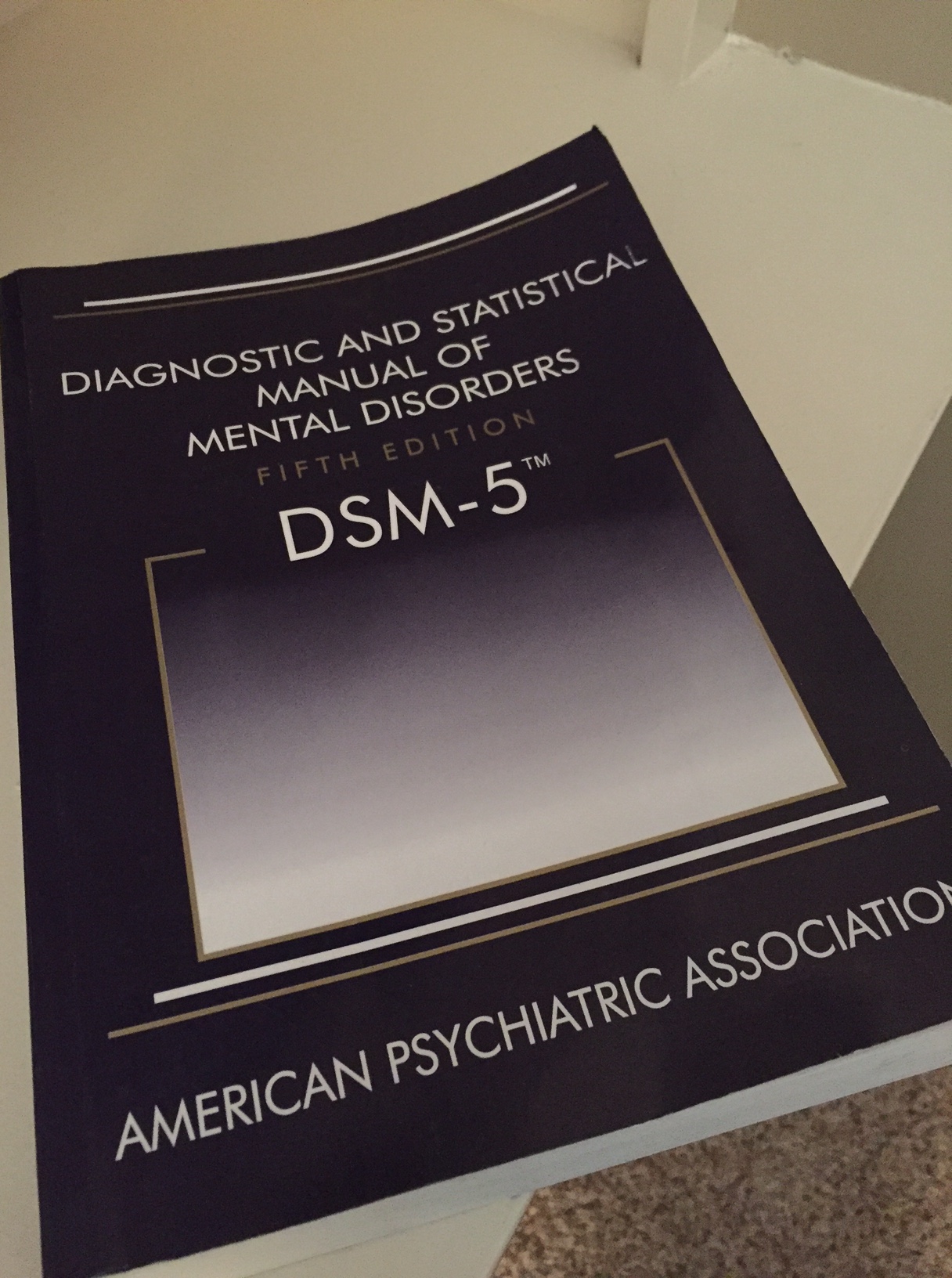
What’s in a name? Autism, Asperger’s Disorder, Pervasive Developmental Disorder Not Otherwise Specified, ASD, HFA, On-The-Spectrum, Neurodiverse, High functioning Autism, Severe Autism, Non-Verbal Autism.  You may have heard any and all of these used when hearing about someone who has Autism Spectrum Disorder (the now official diagnosis to describe all of the above as of 2013).  We will likely intuitively still call Autism all of these terms because as we have all heard “if you meet one person with Autism…you have met ONE person with Autism”.  The criteria was narrowed and Asperger’s and PDD-NOS were eliminated from official diagnosis.  In my private practice as a therapist, I now see children who come through my office with a list as long as my leg (I’m only 5 feet tall, but you get the picture).  Oppositional Defiant Disorder, ADHD, Sensory Processing Disorder, Dyslexia, Social Pragmatic Communication Disorder, Bipolar Disorder……all in one child.  Why??  Because we have eliminated Asperger’s Syndrome from our vernacular.  My children have both been reclassified as Autism Spectrum Disorder (as they are supposed to be due to consideration of prior history and diagnosis).  But they could not be any different.  With hard work that would make your head spin and a hard-core bitch of a mom they continue to improve in terms of working toward being independent, contributing members of our community.  But they could NOT be any more different.  This is autism.