Day 18. R is for Relationships

Day 18 2016: R is for Relationships (originally posted 4/2015)

Jaycee Kemp's avatarRunning through Water

Day 18

“Are you sure he has Autism? He’s so friendly…”. While there are more nuanced aspects now to the criteria, failure to develop peer relationships appropriate to developmental level is one of the defining and most obvious diagnostic identification for children with autism. Interest in people in general, desire for friendships and loving behavior can muddy the diagnostic waters and confuse people about what autism is and what autism isn’t. Disconnectedness, aloofness and lack of desire to be touched does not always translate as a lack of desire for relationships. The desire is there, the understanding for how that happens is not. It can just be easier to be by yourself. A1 can tell you that. Indiscriminate friendliness, hugs and kisses to those he loves and the compulsive desire to be around a lot of people doesn’t always coexist with developmentally appropriate social skills. A2 probably would tell you that part…if…

View original post 217 more words

Day 10 2016:J is for Just Ask

IMG_4894

J is for Just Ask

When I sat down every day last year to do this A-Z project, my biggest take away was the candid responses from friends and acquaintances.  Many of whom told me they wanted to reach out, but didn’t know what questions were ok to ask.

I understand that on a few levels:

  1.  As an inhabitant of this earth, when we see something we don’t understand or is different, we feel compelled to want to know the “why” or the “what happened”. Perhaps its part of the survival instinct-  A primitive way to avoid something that is contagious or preventable.  So, often times when it’s not thought about and someone approaches me and says, “what’s wrong with him?”, my instinct is to say back, “rude people are what’s wrong with him”. When I shift my schema and recognize that even in those awkward moments there is the possibility to make it teachable, I can have a lot more empathy for the individual asking.  After all, I am not sure I am that much more comfortable with a stranger asking me a more direct question either. (ie: “why is he making that hooting noise over and over?”when really I might have absolutely no f-ing idea myself in the moment but I would very much like it to stop).  Parents–whether we like it or not, we are the conduit to bridging our children with this society Many of us are their voices. Even if one person out of 10 who ask are asking to be nosy or rude, if we do not respond as an advocate, we make the assumption that all people who ask in that way are being nosy or rude.  So, instead of “mind your own business” or “whats it to you”, maybe try, “I think what you meant to ask is that you notice that he can’t talk.  This is his speech generating device, would you like to see how it works?” or “My child can understand everything you say and the way you asked that in front of him makes me uncomfortable.  There is nothing wrong, but it seems like there is an aspect of his behavior that you would like to know more about.  He has Autism and maybe one of us can tell you more”.  Pollyanna much?  Sure, but the only way we will change the asker’s behavior is by gently alerting them to the problem, offering a solution and giving them a reality check.
  2. On occasion, people want to ask how they can help. More times than that, people don’t realize we need help.  For those of us who have kiddos who don’t have a obvious trouble in the community, we move along to normalize our experiences. I have been told that I give off the air of having everything under control and that I don’t need anything.  Part of this is for my kids benefit. No one wants a hot mess of a mom in public.  Another part of this is because as my job as a therapist in this close-knit community, I feel like I need to maintain a balance of vulnerability and strength. The hot mess part needs to ride in the back seat to ask “are we there yet?”.  There are other parents whose kids CANNOT safely be in public places.  So, you just don’t see those people.  Their life behind closed doors is like an invisibility cloak and they are not getting asked what they need for those reasons.  Frankly, many of us have NO IDEA what to tell you about how you can help. My family comes infrequently enough, that to dole out a honey-do list also requires having to walk them through where things are, etc. Ultimately, this means more work.  If there were an emergency, they are not enough of a trained listener to know what my child needs if he tells them.  When a friend asks if they can watch my kids so we can get out…well, I still haven’t figured out exactly how one explains that you can’t imagine asking them to change a 10 year old’s diaper ….or telling them they probably won’t get to sleep through the night and must keep one eye open when they are sleeping.  Sometimes people ask to help but they just don’t want to do what you do need. Their perception becomes that you are unreasonable. It is your own fault you are not taking their help.  All can serve as barriers to asking the right questions or giving the right answers for assistance.
  3. People make assumptions instead of asking at all.  Just the other night, a young woman I work with asked me for advice in a situation about a member of her not-for-profit youth group. This teenage girl has Autism and when the entire group is together she tends to get very dramatic and will end her tirade by running out of the room.  This young woman sighed and said, “She only does it in big groups. Obviously attention….we are thinking of ways to let her know that maybe this group isn’t a good fit for her. It’s not-for-profit, so we can’t tell her she can’t be part of it.” We discussed the fact that perhaps they were misreading the function of the girl’s behavior.  The consequence is what sustains the behavior– if no one is rushing out after her, what is the likelihood that this behavior is to get attention and not escape or something internal due to the stress of being in a large group?   She wondered aloud if they should contact the girl’s mother to try to figure it out.  I wondered aloud what would happen if they just asked the girl herself, since she is her own expert.  Use the time and energy to find out what she needs to be a part of the group in a way that works for her rather than using that energy to figure out a way to help her move on.  We cannot help but to look at others using our own lenses.  But sometimes our lenses are smudged, are rose colored or even broken.  By not asking in this kind of situation, others assume they know what is best.

Lets face it. It’s uncomfortable to ask about people who are different than we are. 

We may be curious, afraid of coming off as rude or misread other’s cues.  We may not want to know the answer, we may not want to change our own ways.  We may already have assumptions and think we are right, we may be uncomfortable due to our own scripts about social norms, or frankly, some of us…we may just not care. 

For those of us being asked, we may be offended, we may be hurt, we may not want to talk about it.  We may not know the answer, we may not want to admit to an issue or call attention to it or we may not want to be reminded.  We may not want to be rejected. 

So let’s all agree on something. Asking and telling can suck at the outset.  Let’s move past it.

Those of us who are Autism Families…we ARE the awareness. How you choose to let that manifest is up to you.  In my world, however, if you ask me, I promise to tell you.

Autism Awareness Month. G is for Genetics (and Guessing)

FullSizeRender(5)

G is for Genetics

I get asked often what I think caused my child’s Autism.  I believe it is completely counterproductive to even consider it until such a time that there is solid evidence.  They are here now. I love my kids fiercely. Our struggles would be the same whether or not we knew the ‘why’ part.

Infection in mother during pregnancy, vaccine accidents,  overweight in mother during pregnancy, gestational diabetes, inadequate iodine, diagnostic ultrasounds, prenatal stress, advanced paternal age at time of conception, pesticides both before and after gestation…I’ve read those all.  And they all have the same message:  “Dad….Mom (but more likely Mom)…you did something…IT’S YOUR FAULT.”   These theories are also part of what drives the Neurodiversity movement.  That is, that individual differences and biological diversity are a normal and natural part of evolution and Autism is no different, so it is not something to be treated. Behavioral disruption is misunderstood communication and all the comorbid conditions such as GI/bowel issues, intellectual impairments, mental health issues are just that. Something not related directly to Autism (a whole other can of worms within our community….).

Regardless of your belief system…there is only one thing we know for absolutely certain: NO ONE KNOWS WHAT CAUSES AUTISM.

To demonize parents who make decisions you would not necessarily make is also counterproductive. 

As parents we have an instinct to protect our children. When a parent watches the baby she knows slip away into a world of of silence or pain in front of her very eyes and no one can tell her why or really what to do..well….just take a moment to let that sink in regardless of your parenting/political/medical stance. I don’t have to agree, I just have to have empathy.

Here is what we do know.  There is a genetic component to Autism and it is likely paired with an environmental trigger.  Just like Type 2 Diabetes. You can’t develop this unless you have the genes.  You make it far less likely to get it if you get your butt up off the couch, exercise regularly and do not eat like a regular American.

We just are not 100% certain what that common genetic component or the environmental one in Autism.  I am not going to even pretend to know anything about genetics. The best I can do is tell you:

  1. Picture a city with 20,000 streets.
  2. Now lets figure out which streets have public mailboxes, one way traffic, standard poodles and single mothers living on them.
  3. Only some people who travel down those streets buy mandarin oranges (not regular naval) and we need to find those people.
  4. (But what about the naval orange buying people!? Those are a lot like mandarins!)

That is what it is like trying to figure out the common genetic factor and environmental trigger together. When I had a discussion about this with a pediatrician 12 years ago she said to me: “Autism is caused by a genetics. Period.  To consider anything else is ridiculous.”

I sat for a moment and thought about that.  I then I wondered out loud, “Can you tell me another genetic epidemic in history that unfolded like Autism?” Crickets. I’m a pretty moderate parent…however it is no wonder that many parents are suspect of the medical system with that kind of definitive statement when the bottom line is WE DON’T KNOW.

Does it mean my husband and I have Autism? No, not necessarily…but who knows?  If we do carry that genetic material and we combined it….we no more caused the autism than we “caused” their big gorgeous brown eyes or fact that they may need to wear glasses one day. Their eyes could have almost just as easily been blue instead all things considered.   And if environment did play a role and all the Fruity Pebbles I ate during pregnancy kicked those  genes into overdrive as the environmental trigger, there is not a damn thing I can do about that now.

I have never felt the “shame of blame”…and I don’t think any parent should.

We are wired to procreate and continue population.  We can just hope that this kind of information will one day find the link that allows children who suffer in silence or physical or emotional pain to grow to be independent and happy…just like all parents want their kids to do.

Day 4 2016: D is for Diagnosis

IMG_4731

D is for Diagnosis

By the time my oldest was 18 months old, I knew he had Asperger’s….but no one else seemed to know except for maybe my husband.  He spoke like an adult yet seemed confused whenever anyone asked him something directly.  (“He’s a genius!  Listen to him talk…he’s just busy thinking about other things”).   At Mommy-Tot class while all the other babies would watch with wonder as technicolor bubbles floated by, he was finding his way across the gym to open and close the door over and over. (“He’s a genius!  Bubbles are beneath his intelligence!”) And yes, he loved to go to the park….but would decide which park based on what kind of public toilet was there and then would spend the majority of his time in said toilet if allowed….and I would often have to threaten him with a consequence if he didn’t go and play (“He’s a genius!  He’ll be an engineer one day…he just wants to know how it works!”).    While he also never hugged or kissed me, he would let me do it to him.  I said “I love you” any opportunity I had but he never said it back.  He would let me sit down to play with him, but his back would soon be turned and he was playing on his own again.  His conversations often consisted of repetitive phrases over a video he watched over and over for months at a time.  The list could go on and on….but the fact was that he was not particularly disruptive, he was functional and he was so cute and tiny and spoke so well people mistook him for a quirky genius.   What was difficult is that we lived far from family and friends so when they saw him for brief periods they would just tell us we were worrying too much.  They would see the quirk for a few days at a time….not hours on end like we saw.  So when my youngest got to be about 8 months old and clearly had serious medical issues all concerns we had about A1 went to the way side.  My concerns were still there but again were also pushed aside by the pediatrician when I would bring them up (“Some kids are just persistent” “Drooling has just become a bad habit”)  It wasn’t until he was 7 years old that I had him tested and really, it was only because he was floundering at school.  I was being told that “some kids are average to below average”….the same kid just 2 years earlier everyone was telling me was a genius.  I had to see if he had a diagnosis in order to get him the assistance he needed at school…And sure enough….psychoeducational testing by a licensed psychologist showed what we always knew.  ADHD and Asperger’s Disorder.  A few years later I actually got a second opinion from another psychologist…and guess what….same outcome.  On standardized testing. Across settings.  Again.  He is definitely not a genius…but he is also definitely not below average.  A1 is the fall-through-the-crack kid.  His rigidity can be seen as defiance.  His poor social skills makes him look like a loner.  His attention issues make him look lazy.  And as the person who lives with him 24/7 I can tell you he is no more of those things than any 12-year-old.  He is a people pleaser and when he thinks he has failed at that he kicks himself over it.  Overall, A1 is going to be fine….but I believe it is because we have recognized the thing that makes him different…but not less.

A2 was not diagnosed until the age of 4 despite my husband and I and everyone around us knowing something was very wrong.  What was troubling was that when he turned 6 months old and I started him on solids…everything else stopped.  Except for the worst constipation I have ever witnessed.  He stopped growing.  Stopped.  Completely.  At one year he was about the same size and weight as he was at 6 months old.  He stopped developing but did not lose any skills.  At 12 months he was the same adorable little nugget he was at 6 months.  Was it possible I willed him to stay an infant?  What also did not change was his inability to stay asleep for more than 90 minutes at a time.  Down for 90…up for 2 hours.  This went on for 2 years and one day I got the flu and was out of commission for 10 days.  I had to let my husband get up with him through the night.  When I got out of those sweaty sheets after 10 days….it occurred to me that I was not clinically depressed as I believed I was up until that moment my body became an achy, hot mess….I instead emerged a new woman.  A rested woman forced to sleep by a virus.  A2 had already been diagnosed by a fresh muscle biopsy at the Cleveland Clinic with Static Encephalopathy with Mitochondrial Dysfunction….we got a scary letter to take with us everywhere we went.  We were told not to let his blood sugar drop too low.  We were told to keep him cool in the summer.  We were told to have a very low tolerance for fever and dehydration.  We were told he had an uncertain life span.

At about 2 years old when he started crawling he found that rubber stopper thingy  behind a door. Thhhhwwwaaaang! He’d whip his head to the side and roll his eyes.  Thhhhwwaang again.  Again with the head thing and eye rolling.  I remember my heart dropping to my stomach.  I remember thinking “oooohhhhh shiiiiittt”.  I knew that was a stim (self-stimulatory behavior). For the next 2 years I watched A2 develop at 20% of the speed of the rest of his peers.  He went from being the most social baby of the group and as his peers developed speech I watched him realize he was not part of the group…to standing by the group and watching everyone play….to standing out of the group and not paying attention to everyone.  To this day I believe it is not because he didn’t want to…but because he knew he couldn’t.  He flapped.  He screamed.  He stopped eating all solid food. He had no language other than the vowel sounds of babbles of a young infant.  But he was still sweet, and loving and laughed heartily.  He was finally diagnosed at 4 years old with Pervasive Developmental Disorder-Not Otherwise Specified (PDD-NOS).  The diagnostic version of “your kid has Autism…mostly…”.

What’s in a name? Autism, Asperger’s Disorder, Pervasive Developmental Disorder Not Otherwise Specified, ASD, HFA, On-The-Spectrum, Neurodiverse, High functioning Autism, Severe Autism, Non-Verbal Autism.  You may have heard any and all of these used when hearing about someone who has Autism Spectrum Disorder (the now official diagnosis to describe all of the above as of 2013).  We will likely intuitively still call Autism all of these terms because as we have all heard “if you meet one person with Autism…you have met ONE person with Autism”.  The criteria was narrowed and Asperger’s and PDD-NOS were eliminated from official diagnosis.  In my private practice as a therapist, I now see children who come through my office with a list as long as my leg (I’m only 5 feet tall, but you get the picture).  Oppositional Defiant Disorder, ADHD, Sensory Processing Disorder, Dyslexia, Social Pragmatic Communication Disorder, Bipolar Disorder……all in one child.  Why??  Because we have eliminated Asperger’s Syndrome from our vernacular.  My children have both been reclassified as Autism Spectrum Disorder (as they are supposed to be due to consideration of prior history and diagnosis).  But they could not be any different.  With hard work that would make your head spin and a hard-core bitch of a mom they continue to improve in terms of working toward being independent, contributing members of our community.  But they could NOT be any more different.  This is autism.

Day 2 2016: B is for Behavior

IMG_2885

B is for Behavior

All behavior serves one of 4 functions:

To gain attention

To escape a situation

To gain access to something (usually tangible)

or

A response to an internal stimuli such as hunger, illness or exhaustion.

Seriously.  Just 4 reasons anyone does anything.  Think about it–you won’t come up with a 5th. I have tried.

Of course, if it were that simple we would all live in harmony.  However, there are some times it gets tricky.  For instance, when a behavior is triggered by something internal, it can be incredibly difficult to identify.  So if a child with autism likes to clap his hands near his ears is it because he likes the sound?  Or is it because he likes how his hands feel when he claps them together?  Or is it because it creates a little wind near his face which he likes?  To make matters even more complicated…a behavior can change function midstream and without warning.  So that same kid who liked hearing the sound of his own clapping next to his ear and his parent rushes over to him and holds his hands and tells him “stop!  Lets play instead”….her reaction may have just inadvertently changed the function of the child’s behavior from internal reasons to external. Perhaps it becomes a great way to get his parents’ attention now too.  Such is the nature of human existence…including humans on the Autism Spectrum.  It is easy to judge others without understanding when looking at their behaviors through our own lenses.  So next time you see a child having a tantrum in public or seems out of control, bear in mind that the function of his behavior may not be attention like you might be used to from a bratty kid. He may be responding to sensory overload and needs to leave or perhaps if you hang out long enough you may come to find it may be screams of joy because he has no other way to express it.

Why we do the things we do. The trauma edition.

-font-b-Handmade-b-font-mini-kraft-paper-font-b-envelope-b-font-5-8x9cmThere is a large manila envelope still sealed sitting on my desk. No matter how much I stare at it, it doesn’t:

1. Spontaneously burst into flames

2. Disappear

3. Take care of itself.

It does not contain a subpoena, a warrant for my arrest or an eminent domain letter. It was not delivered certified mail or by official messenger. It was hand delivered by my 6th grader because the teacher very graciously contacted me ahead of time to ask me how I would like the prior written notice papers from the last IEP meeting delivered so I could sign and return them in a timely manner to the school. It has been sitting and judging me silently for over three months now as it sits untouched. I am reduced to a Pavlovian dog, except my bell is an envelope and my saliva is anxiety. A crippling-can’t-get-any-thing-else-done anxiety. And I rationally know there is likely nothing in that envelope that should really cause this kind of response. But that’s the thing with phobias or irrational fears and trauma response.

Yes…I said trauma response. 

Often times prior experience attaches itself to something innocuous and we then pair our previous response with a neutral stimuli and generalize it over time. Caller ID with the school prefix, email and now apparently manila envelopes have become the manifestation of years of battles, blockades and having my already fledgling parental competency called to the carpet.

For me….my defining moment were words uttered in a meeting 7 years in….but 3 years ago:  “Its not fair for one (A2) to get more just because of your parental advocacy”  (which was agreeable…but in a whole different way given we were discussing data collection that was reportedly correct, not collected by me…and concerning). 

It is silly I suppose if you are the one who stuffed the envelope and have no knowledge of my defining moment or my other, more academically impaired child. She certainly must be wondering about the warning likely issued by the elementary school about my hypervigilance, because the experience she is having is the opposite. A parent who is late to answer emails yet bizarrely will parse apart data collection in an IEP meeting….and be spot on why it was taken incorrectly must mess with her own schema of special needs parents.   I have learned to become a very hands-off parent in hopes of preserving my own life in the last year.  I have a double-decker weekly pill case that houses my capsules of life extending medications that would impress most of the AARP crowd.  Yet I am not yet even 50.  Years of sleep deprivation and external stress can only wear so long in a genetic cesspool.

So there it sits….but not without words. It screams to me every day over the din of my responsibilities. But I am strong and I can withstand long term, unfocused wailing.

So I leave you with 3 truths….

A. I am human.

B.  I love my child more than anything I could have ever imagined.

C.  I am preparing for an uncertain future in a time that I will no longer be here to advocate in a world that does not see my child as perfect as I do.

…and there are things that get in the way of of the co-existence of Notions A, B and C.  

Sorry about the envelope.

Random Acts of Dignity: The Ultimate Advocacy for My Disabled Child

IMG_3505

Dear Donna, Cashier at Wendy’s,

My 10 year old and I stopped in for lunch today on your shift. I could see after you asked him how he was doing today that his jumbled answer might have caught you off guard. You shifted your eyes to me and then back to him as he continued…something that happens all the time in our world. So I looked down at him and as his 24/7 speech and language coach I said “You can say, ‘I’m good!'”.

But then you caught me off guard. Instead of looking to me for his order, you asked him.

He answered you.

You leaned in and said “I think you said you want a cup of water. Is that right?”

He nodded.

“Aren’t you getting anything to eat?! What else?”

After he excitedly spit out a string of jargon you asked him to slow down and try again. So he did.

“Fuhweyes” he said.

What size?” you asked.

Mee-yum.

Great….anything else?” she asked, glancing quickly in my direction.

I shook my head as my son clearly said, “Nope!”

What you didn’t know as we held up the line is that my son has Childhood Apraxia of Speech, but the name of his disorder didn’t matter to you. What mattered to you was making sure you got his order right.

You didn’t “let” him be an equal patron at your restaurant…he just was.

You let him be his own expert.

You presumed competence. Not your version of competence, his.

You allowed him the dignity of time.

You asked him his name to put on the screen for his order just like everyone else and checked out to see if you said it right. You even asked him if he knew how to spell it for you. So he did.

Through this act I am certain you are not expecting a newspaper article or local talk show segment. You weren’t trying to be noticed or given kudos or wanting to be called a hero because you took a moment and tried a little harder. You wanted a 10 year old at your counter to order lunch just like any other 10-year-old might on a Friday afternoon.

Advocacy and inclusion are tricky things. When they come from a place of equality, empathy and understanding they are wonderful things. When it lacks authenticity, it can still have a place but can also be humiliating and damaging to an already fledgling movement. By “letting” my child be prom king, shoot the last basket in the last 10 minutes in the last game of the season, by being so kind as to “be his friend” , well meaning people are inadvertently continuing to marginalize him. No one has assumed that he was worthy of the crown on his own, able to make that basket without help or that maybe he makes one heck of an awesome friend and that perhaps HE is the kind one.

So you, Donna your authentic advocacy is the kind that will change the way we as a society deal with disability. Thank you for lunch with a side of hope.

Sincerely,
A2’s Mom

To the Regular Ed Teachers: Top 5 Ways to Keep Special Needs Parents Off Your Back

FullSizeRender(5)
My home phone rang the other day right before my kids got home from school. For those of you who do not know what I mean by “home phone”, its that thing that plugs into a wall and has the # symbol that cannot hashtag anything. When the home phone rings, I typically keep doing whatever I am doing unless I am feeling a bit of whimsy to torment the telemarketer likely on the other end. The only other time it rings is when someone at the school does not know to call my cell…which often then strikes fear in my heart. So I picked up.

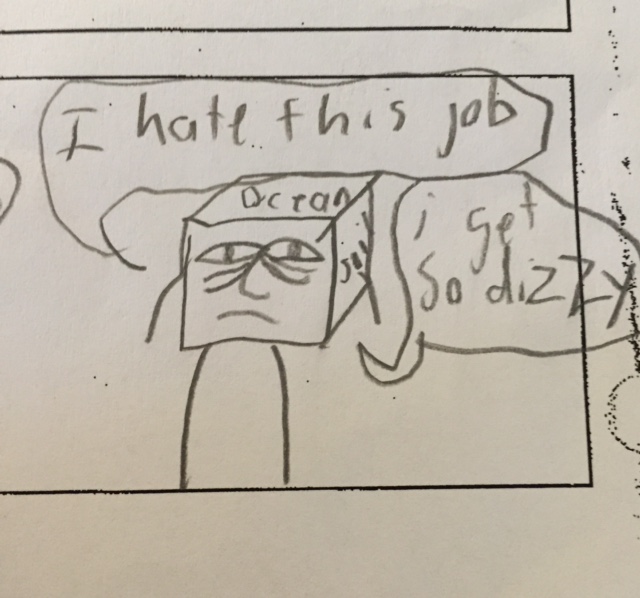
“Mrs. ATeam?” Gulp.  It was A1’s new science teacher calling to say “First of all….let me tell you I think he is hilarious. He made this cartoon strip ….” He then went on to disclose all the other things drenched in awesomeness while I was waiting for the “Second of all….” part. That part never came. He called me to tell me I had a cool kid. And that was it.

I am already too experienced with the school system to be naive. That same morning I had to send an email to kindly remind another teacher to carefully review A1’s IEP and Health Plan as there were some important things not being followed. Coincidence to hear from the science teacher the same day? Probably not. I am guessing he may have just been reminded that he had a kid in his 4th period class who has an IEP and a Health Plan. Maybe not…but as I said, doe eyed ingenue does not work as well with crows feet.

Unfortunately, what struck me most about this amazing phone call is that in the 3 years that my younger A2 has been in public school…my very speech impaired child…I have never ONCE received a phone call from a regular ed teacher just to tell me about his day in their class. And let me be clear about 2 things. Real clear since this won’t apply to everyone.

1.   A2 tries to tell me about his day. Every day. And we CANNOT understand him.

2.   I have ASKED  for communication. Over and over. Every year. In front of other people. To almost no avail.

So teachers…this advice is completely free of charge. The key to keeping us special ed parents at bay.
1. CONTACT US FIRST: Before school even starts, call to introduce yourself and ask about our kid. Give us your contact information. Assure us you are the extra eyes and ears for a kid who has no voice.
2. DON’T ASSUME THE INTERVENTION SPECIALIST IS JUST TELLING US EVERYTHING. My kid has a whole 30-60 minutes a day of direct IS time required in his IEP in our high-end-award-winning-district. My severely learning disabled child. The paraprofessionals who are with him most of the day are not permitted to communicate with me directly due to their classified employee status. We often get second hand info from our IS that sounds something like “had a great time in music class learning new songs”. The small tidbits we do get…well…that’s all…that’s ALL we get to know. The nuances are never there for us…if they are making a new friend, if someone hurt their feelings if they thoughts something was cool or interesting. And those things are definitely happening in my child’s world and no matter how hard he may try to share those things with me, if I have no context, I will not know at all what he is telling me let alone what questions to ask. The paras also are not allowed to attend IEP meetings even at my request. Were you aware of any of that? A2’s Intervention Specialist has 10 kids who can’t tell their parents anything about their day. She is ALL of their voices….and she is trying very hard to be all knowing by being the 3rd party communicator. But why? This is a team approach. While you do have 25 kids in your room, if they are lucky and have parents who actually ask them about their day, their kids can tell them. You have so much you can tell us and I guarantee all of us want to know.
3. INVITE US IN: To volunteer, to be a fly on the wall, to talk about our kids to your class. Did you know that neither you nor any of his other caregivers during the day are allowed to divulge any information regarding our child’s diagnoses to the other children due to HIPAA**?  And there are SO many questions from children aren’t there? If you have an inclusive classroom, the information a parent can provide the children can be invaluable to the inclusive environment. Offer to include the IS to help that parent if they express interest but are uncomfortable. **IMPORTANT DISTINCTION:  FERPA (Family Educational Rights and Privacy Act) any information that is directory information is ok to give out.  So If a parent is asking for another child’s last name or to get in touch with another family, that is not confidential information if the family did not opt out of directory information.  You just can’t tell us the child is on an IEP or anything regarding diagnosis.
4. RECOGNIZE WE UNDERSTAND YOU ARE BUSY: We are not out to get you or have a “gotcha” moment. I cannot imagine being a teacher right now. Huge classloads, jobs dependent upon test scores that are dependent on more than just your ability, differentiated instruction, outliers flying under the radar, helicopter parents, uninvolved parents. A 10 minute phone call once a month to tell us something we wouldn’t know without your call. If you do that once a month without fail you will likely never hear from us. But your principal will almost definitely hear from us. To hear how awesome you are.
5. INCLUSION AND INTEGRATION ARE DIFFERENT: This doesn’t mean let them also have a desk and have peers help them hang up their backpacks (though we recognize the value in that too). I mean if you take a picture of our kids to put on a bulletin board make sure it is a good one like everyone else. If you are in reading to the class and you ask a question the other kids can answer, figure out a way to ask a question that could include our kids’ ability to answer. While you have kids who can fall through the cracks, ours have absolutely no way to mountain climb out of those crevices without you. I am sure like us you don’t want them just to be a warm body at another desk. Ask their IS for strategies…that is why they are there.

BONUS #6 also at no charge: THE MOST DIFFICULT PARENTS ARE LIKELY YOUR BIGGEST ALLIES: Yep. We are the wave makers, the getter-doners. We figure out what you want and need and we try to get it for you especially if it will benefit our kids. Sometimes you don’t even need to tell us what that is. We figure it out. Assume nothing regarding our motivations.

For those of you who went into regular education vs. special education–those days are long gone. Inclusion is not just the responsibility of your Intervention Specialists. Much like us parents of kids with special needs…we started out in the exact same place as all the other parents in your room. Maybe even as you did too as a parent. Our journey veered off years ago but the desire to get to know the same thing we would have if everything turned out as expected has not.

Autism Awareness Month. W is for What It’s Like

Day 23

W is for What It’s Like

“There is grandeur in this view of life…..from so simple a beginning endless forms most beautiful and most wonderful have been and are being evolved”On the Origin of Species, Charles Darwin.
A few years ago I attended the funeral of a friend who suffered and died much too young. He was a scientist-a biologist, an activist, a researcher who was respected in his field and likely the smartest person I knew. He was also pedantic and opinionated with a biting but funny sense of humor. This combination engaged even the most simple of us but most of his friends were equally as interesting and I got to numbly stand in a room in Vermont in the dead of winter surrounded by them. “What’s it like?” a friend of his asked me…”having a child with Autism?” For a moment I just thought I was not in the mindset to answer that question but quickly realized I could NOT answer because in all the years I’d not only never been asked that but also never considered it either. It was the kindest thing anything had ever asked me about A2 and perhaps it was the somber tone of the day that rendered me without speech (which if you know me well does not happen often) or maybe I had always been so caught up in the action oriented nature of having a young child with autism that to contemplate that would stop me in my tracks and make me crumble….or perhaps in the moment I felt guilty for even thinking I would crumble and considered myself so lucky to still have those I loved around me regardless of circumstance while my best friend was grieving the loss of his partner……so I excused myself instead. What I have decided over the years is that it is a bit like A2 contemplating this fountain. It is weird and fascinating and wonderful and I have no idea how it really works or how it got there. I notice every single droplet from the ones that predictably slide down the posts to the ones that spit out to collectively leave me standing in a cold puddle over time that leave my toes numb without notice until its too late. There is no warning when the water will turn to an exciting spout of beauty creating a soft rain and visible rainbow or when it will create bursts of rainy arches that I cannot immediately escape leaving me far more drenched and colder than I want to be and on opposite sides of the fountain from whomever was standing near me. So Trevor…..that is what it is like……Thank you for asking

Day 21 Autism Awareness Month. U is for Ubiquinol

Day 21

U is for Ubiquinol

(originally posted 4/2015)

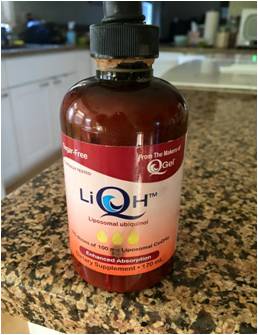
If you have heard this word before it is likely that you are either are a biologist or have a child with a mitochondrial disorder. In our case, to be sure….I am not a biologist. There is mounting evidence that autism and mitochondrial disorders at least co-exist in many cases. Mitochondria are organelles in almost every cell in the body and are considered the powerhouse of the cell. The mitochondria break down chemical compounds into energy and put it back into the cell for use. When there is a breakdown in the mitochondria factory, it cannot produce enough energy for the cell which can result in cell damage or death. This damage tends to affect larger organ systems such as the brain, heart, endocrine system, gastrointestinal system, kidneys and respiratory system. (As I mentioned….I am not a biologist..that’s about the best I can explain). The first time after 9th grade biology I heard about ATP or mitochondria was sitting in a neurologists office with A2 when she cocked her head and said “I need to send him to the Cleveland Clinic….I think he has mitochondrial disease…I am so sorry….”. I was confused–“Ok”, I said and left the office feeling optimistic that maybe we figured out why my baby completely stopped physically growing or gaining weight and developing. If we know what it is….we can treat it, why was she apologizing? But as it turns out, there is no cure and no real treatment for mitochondrial disorders. These disorders also tend to be progressive in nature so we must try to protect the mitochondria to the best of our ability using supplementation (thus the Ubiquinol CoQ-10) and body system balance. Under a microscope, A2’s mitochondria are oddly shaped..and there are a whole lot of them…and this hastened the question did some disease process or environmental assault cause this problem….or did he inherit it from me (mito are maternally inherited)? If something happened, what was it? Did I eat too many pesticides on my produce while nursing? Was his immune system down when he got a vaccination? Was the rated “F” water in Las Vegas where he was born full of toxins that damaged my baby? I am rational enough to know that there was nothing I could have done about my own mitochondria nor could I guess exactly what environmental assault would have caused such a huge problem…but it is here. And I now know why the neurologist apologized to me on that warm, blue skied summer day back in 2006…..